
If you are asking is water dripping from AC dangerous, the answer depends on where the water is. A steady drip from a small pipe outside your house is the system working the way it should. Water dripping inside, from a ceiling, a vent, a closet floor, or the cabinet around the air handler, means condensate is going somewhere it was never meant to go, and in a Florida home that runs the AC most of the year, that water can reach drywall, flooring, and framing within days.
This guide covers where AC water is supposed to go, how to tell a normal drip from a dangerous one, where drain line leaks cause damage in Florida homes, what to do in the first hour, and how mold follows a leak.
Where AC Water Is Supposed to Go
Your air conditioner removes moisture from the air as it cools. Humid air passes over the cold evaporator coil inside the air handler, water condenses on the coil, and it drips into a pan below. From the pan, the AC drain line carries that water outside or to a plumbing drain.
In a humid Florida summer, that system moves a steady stream of water every day the AC runs. As long as the pan drains and the line stays clear, you never see it.
Why Drain Lines Clog
The drain line is a dark, damp, slow moving pipe, which makes it a good place for algae, slime, dust, and mold to build up. Over months, that growth narrows the pipe until water backs up into the pan. The same damp conditions are behind mold in AC ducts, so a slimy drain line and a musty vent tend to show up together. The Department of Energy notes that clogged drain channels prevent the unit from reducing humidity, and that the excess moisture may discolor walls or carpet. In other words, a clogged line causes two problems at once: water where it does not belong and damp air throughout the house.
Other Reasons for AC Leaking Water
A clogged line is the most common cause, but not the only one. A cracked or rusted drain pan, a disconnected fitting, a failed condensate pump, or a frozen coil that melts all at once can produce the same puddle. Those causes need an HVAC technician. The water damage they leave behind is a separate problem, and it is the one that grows if nobody deals with it.
Is Water Dripping From AC Dangerous
Here is the short version: water outside is normal, and water inside is not. The longer answer depends on what the water is touching.
When It Is Normal
A drip from a short PVC pipe near the outdoor unit or along an exterior wall is the condensate line doing its job. It should drip more on hot, humid days and stop when the system is off. If that outside drip suddenly stops on a muggy afternoon while the AC is running, that can be an early sign the line is blocked and the water is backing up inside.
When It Is a Problem
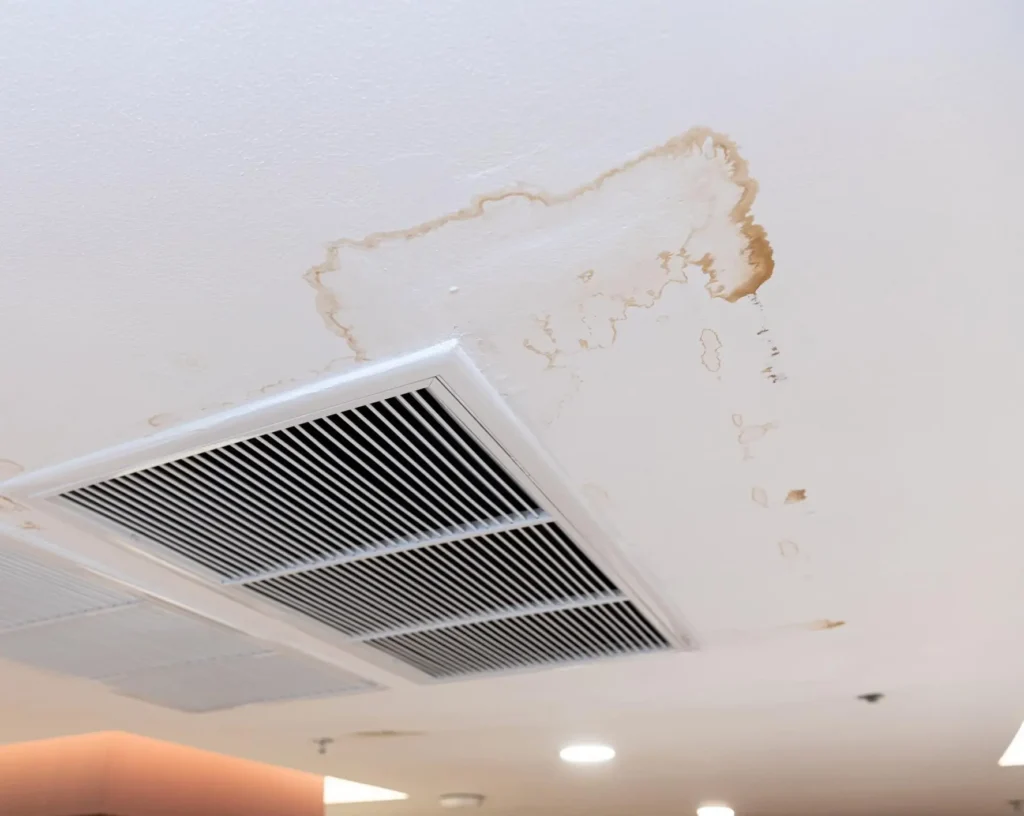
AC leaking water inside the home is a problem every time, even if the amount looks small. A few drops a minute adds up to gallons over a day, and the water rarely stays where you see it. It soaks into the ceiling, wicks into the bottom of drywall, and runs under baseboards and flooring. Mold can start on those wet materials quickly, as covered in how long it takes mold to start growing.
When It Is Urgent
Turn the system off and act the same day if you see any of these: a sagging or bubbling ceiling under the air handler, water near electrical outlets or the air handler’s wiring, a musty smell coming from the vents, or water that has been leaking for more than a day or two. A sagging ceiling can hold a lot of water and give way without warning, so keep people out of the room below it.
Where Drain Line Leaks Cause Damage
Where the water goes depends on where your air handler sits. In Florida homes, that is usually the attic, an interior closet, or the garage, and each location fails differently.
Air Handler Location | Where the Water Shows Up | What Gets Damaged First |
Attic | Stain or bubble in the ceiling below the unit | Ceiling drywall, attic insulation, framing |
Interior closet | Wet carpet or tile at the closet door, damp baseboards | Flooring, bottom of drywall, closet contents |
Garage | Puddle on the slab, wet bottom of the wall the unit sits against | Shared wall with the house, stored items |
Attic Air Handlers
An attic unit is the hardest to watch because nobody goes up there. A backed up pan can overflow onto insulation and drywall for days before a stain appears on the ceiling. By then, the insulation is soaked and the top of the drywall may already have growth. Our guide on what causes mold in the attic covers how that space traps moisture. A ceiling stain from an AC leak can look like a roof leak, and the steps in identifying water damage from a leaking roof help tell them apart. An AC stain sits under the air handler and grows on hot days, not after rain.
Systems installed over a finished ceiling usually have a backup, either a secondary pan under the unit or a float switch that shuts the AC off when the pan fills. If your AC stops cooling on its own and will not restart, a tripped float switch is worth checking before you assume the system has failed.
Closet and Garage Air Handlers
Closet units leak into the floor and the walls around the closet. Water soaks the carpet pad or slides under tile and vinyl, and drywall wicks it upward from the bottom edge. The signs of water damage behind a wall, including bubbling paint and soft baseboards, apply here too. Garage units are less likely to damage finished space, but the wall shared with the house can still take on water.
What to Do in the First Hour
When you find water inside, the goal is to stop more water from coming and to start drying what is already wet. A few steps make a real difference:
- Turn the AC off at the thermostat so the coil stops making water.
- Shut off power to the air handler at the breaker if water is near wiring or the unit itself.
- Move furniture, rugs, and stored items out of the wet area.
- Place towels or a bucket under active drips, and if the ceiling is bulging, keep everyone out of the room below it.
- Take photos of stains, puddles, and the air handler for your insurance claim.
- Call an HVAC technician to clear the AC drain line or repair the pan, and call a water damage company to check what got wet.
Clearing the line fixes the source. It does nothing for the water already in the ceiling, walls, or floor. A water damage restoration crew uses moisture meters to find where the water traveled, removes wet insulation and drywall that cannot dry in place, and runs drying equipment until readings are back to normal.
How Mold Follows an AC Leak
The EPA advises drying water damaged materials within 24 to 48 hours to prevent mold growth. An AC leak in an attic or closet often goes unnoticed longer than that, so mold becomes a common second problem after the water itself.
Inside the House
Wet ceiling drywall, carpet pad, and the paper face of drywall all feed mold. The EPA also recommends keeping indoor humidity between 30 and 60 percent, and a blocked drain line pushes humidity up at the same time it leaks water. A musty smell that lingers after the leak is fixed is a sign that something stayed wet too long. Our guide on testing for mold after water damage explains how to check.
Inside the AC System
When the pan overflows or stays full, mold can grow on the pan, the coil housing, and the start of the ductwork. Running the system then spreads spores and odor through the house. If you notice a musty smell when the AC kicks on, have the system checked before running it for weeks. A professional mold inspection can tell you whether growth is limited to the pan area or has reached the ducts and surrounding drywall.
What This Means for Your Home
There are limits to what you can see from below. Ceiling stains show where water pooled, not how far it spread across the insulation, and drywall can look dry on the room side while the back stays wet. Expect the real size of the damage to show once the wet material is opened up.
Keeping a Small AC Leak From Getting Bigger
Water dripping outside is normal. Water inside your home, near wiring, or above a ceiling is not, and the sooner it is dried, the less likely you are to need mold removal later.
The Mold Guys handle water damage and mold cleanup for homes across Southwest and Central Florida, from Tampa to Naples. If your AC has leaked into a ceiling, closet, or floor, Contact us to schedule a free consultation.
Sources
- US Department of Energy explains air conditioner maintenance and how clogged condensate drains affect humidity, walls, and carpet.
- US EPA lists the basics of mold control, including drying wet materials within 24 to 48 hours and keeping indoor humidity between 30 and 60 percent.
FAQs
Q: Is water dripping from AC dangerous?
A: Water dripping outside from the condensate pipe is normal. Water dripping inside, from a ceiling, vent, or the air handler, can damage drywall, flooring, and insulation and lead to mold within 24 to 48 hours, so it should be stopped and dried quickly.
Q: What causes an AC drain line to leak?
A: The most common cause is a clog from algae, slime, and dust inside the drain line. A cracked or rusted drain pan, a loose fitting, a failed condensate pump, or a frozen coil melting all at once can also send water into the house.
Q: Should I turn off my AC if it is leaking water?
A: Yes. Turning the system off stops the coil from producing more water. If water is near the air handler’s wiring or an outlet, also shut off the breaker. Leave it off until the drain line or pan has been repaired.
Q: Can an AC leak cause mold?
A: Yes. Water from a blocked drain line soaks ceiling drywall, insulation, and carpet pad, and it raises indoor humidity at the same time. Mold can grow inside the house and inside the AC system if wet materials are not dried within 24 to 48 hours.
Q: Does homeowners insurance cover water damage from an AC leak?
A: Coverage depends on your policy and on how the leak happened. Sudden damage is treated differently from slow leaks caused by poor maintenance. Take photos before cleanup and call your insurer early so the adjuster can see the damage.