
Mold in refrigerators and dishwashers almost never starts where anyone can see it. It builds up behind door gaskets, inside drip pans, and along drain lines, places that stay damp long after the appliance itself looks clean and dry on the outside. Both appliances are built to hold water and moisture as part of normal operation, which is exactly what makes them naturally prone to mold once that moisture is not given a chance to fully dry out between uses.
A cleaning routine that only wipes visible surfaces will miss where moisture actually collects, which is a large part of why the smell so often returns within days of a thorough-feeling cleaning. We will walk through where hidden moisture actually collects inside a refrigerator and dishwasher, the early signs that mold has already started, and how to clean and prevent it without damaging either appliance.
Why Hidden Moisture Builds Up Inside Refrigerators and Dishwashers
Both appliances rely on rubber gaskets, drainage systems, and enclosed compartments that trap moisture as part of normal operation, which is what makes mold in refrigerators and dishwashers so easy to overlook until it has already established itself.
Door Gaskets and Seals Trap Condensation
The rubber gasket around a refrigerator or dishwasher door creates the seal that keeps cold air or wash water inside, but its folded design also traps condensation and food or detergent residue in the same crevices. Because that area rarely dries out completely between uses, it becomes one of the most common starting points for mold in a dishwasher door seal, following the same hidden-moisture pattern seen in front-loading washing machines. A refrigerator gasket develops the same issue for a slightly different reason, since it seals against a warm kitchen instead of holding in wash water, but folded rubber traps moisture either way.
Drip Pans and Drain Lines Hold Standing Water
Refrigerators route condensation to a drip pan, and dishwashers drain through a line that can develop a low point where water pools instead of fully draining. Both are designed to handle some moisture, but neither is designed to have that moisture sit indefinitely. A pan or line that never fully empties becomes a small reservoir mold can use.
Florida’s Kitchen Humidity Adds to the Problem
A Florida kitchen already runs more humid than kitchens in drier climates, especially with a stove and dishwasher both venting warm, moist air during use. Appliance interiors that would dry out reasonably fast elsewhere may stay damp longer here, giving hidden mold more time to establish before anyone notices a smell.
Why These Two Appliances Sit Side by Side in Risk
Refrigerators and dishwashers often share a wall, a water line, or at minimum the same room air, so a humidity or leak issue affecting one can influence the other. A kitchen that runs consistently humid because of poor ventilation raises the mold risk for both appliances at once rather than affecting just one in isolation.
Signs of Mold in Refrigerators and Dishwashers You Might Be Missing
Because so much of this growth happens out of view, the signs tend to show up as symptoms rather than visible spots at first.
A musty smell that greets you when the door opens. This is often the first and most reliable sign, since the smell usually shows up well before any discoloration is visible on the gasket or interior walls. How to remove mold odor at the source matters more than masking it with an air freshener, which only hides the underlying growth.
Black or pink specks along the door gasket. Running a finger gently along the folds of the gasket, without pressing hard enough to damage it, often reveals small dark or pink spots that are easy to miss during a quick wipe-down.
Food spoiling faster than it used to. A refrigerator with hidden mold growth can struggle to maintain consistent humidity and airflow inside the compartment, which sometimes shows up as produce wilting or dairy turning sooner than expected.
Dishes that come out with a lingering odor or film. If dishes smell musty or feel slightly filmy even after a full wash cycle, growth inside the dishwasher’s door seal, filter, or spray arm housing is a likely culprit rather than a detergent issue.
Visible water pooling at the base of either appliance. Standing water where an appliance meets the floor points to a drainage or seal failure that is actively feeding a moisture source mold can use continuously.
A refrigerator ice maker producing discolored or off-tasting ice. Since ice makers connect to a water line running through an enclosed space behind or beneath the unit, contamination there is one of the more overlooked signs of hidden mold in kitchen appliances, since the ice itself hides the problem until it is already noticeable in taste or color.
Mold Risk by Appliance Area at a Glance
The table below breaks down the areas most prone to mold in refrigerators and dishwashers, since knowing which spot is at risk makes cleaning far more targeted than wiping down the whole appliance blindly.
Appliance Area | Common Cause | Mold Risk |
Refrigerator door gasket | Condensation and food residue trapped in folds | High |
Refrigerator drip pan | Standing condensation that is rarely emptied | Moderate |
Ice maker line | Slow leaks inside an enclosed, rarely inspected space | Moderate |
Dishwasher door gasket | Wash water and detergent residue in folded rubber | High |
Dishwasher filter and drain | Food particles and standing water between cycles | High |
If more than one of these areas shows a sign at the same time, mold in refrigerators and dishwashers is likely affecting the whole appliance rather than one isolated spot.
How Hidden Moisture Actually Gets In and Sits There
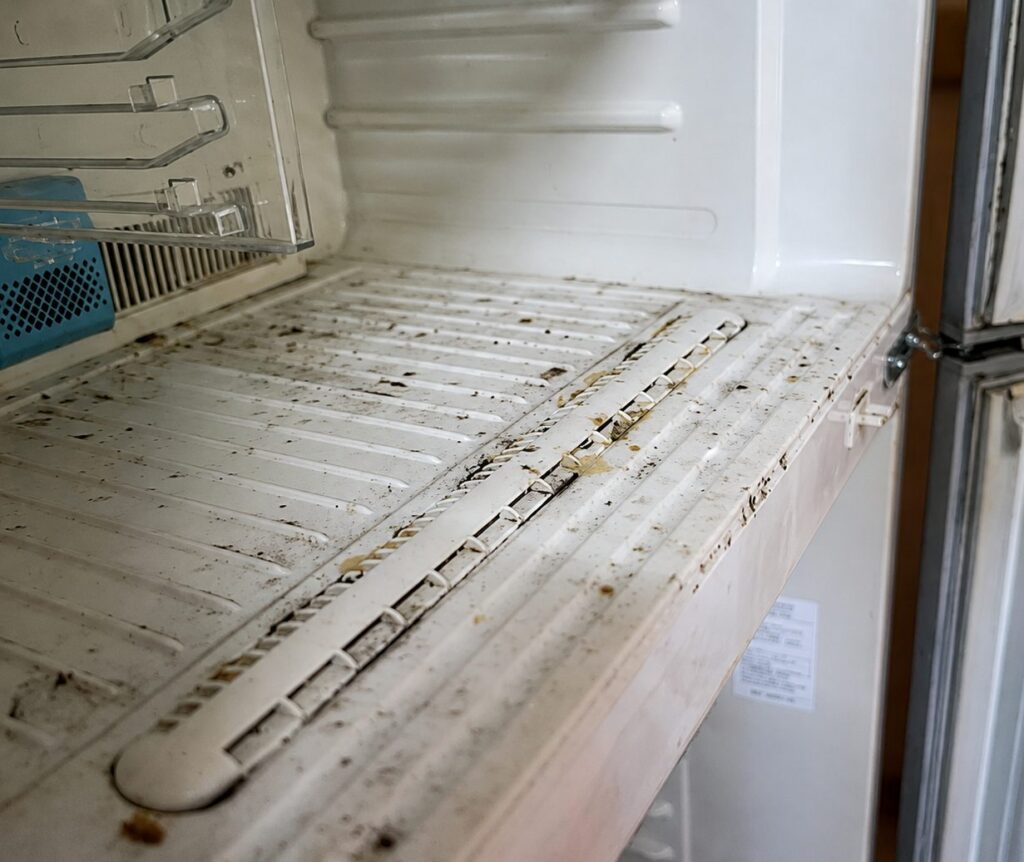
Understanding the mechanism behind hidden mold in kitchen appliances makes it much easier to know where to look and what to fix.
Refrigerators: Condensation With Nowhere to Go
Every time the refrigerator door opens, warm kitchen air meets the cold interior and condenses. In a well-maintained unit, that condensation drains away efficiently, but a worn gasket, a clogged drain tube, or a drip pan pushed too far back to check regularly all interrupt that process and let moisture sit against interior surfaces.
Dishwashers: Water That Never Fully Drains
A dishwasher is designed to hold water temporarily, but a partially clogged filter or a drain hose with a low spot can leave a small amount behind after every cycle. Over weeks, that residual water, combined with food particles, creates the damp, organic environment mold needs.
Water Lines: The Hidden Connection Point
Both appliances often connect to water supply lines that run near or through the same cabinetry as the kitchen sink. A slow connector leak on either line can dampen the surrounding cabinet floor for months before it is noticed, which is part of why mold under the sink and appliance mold often turn out to be connected rather than separate issues.
Why a Quick Wipe-Down Often Misses It
A standard cleaning pass typically covers the flat, visible surfaces of a refrigerator interior or dishwasher tub, but the folded rubber of a gasket, the underside of a drip pan, and the inside of a drain filter are shaped in ways a sponge or cloth cannot fully reach. Homeowners searching for how to remove mold from refrigerator interiors are often surprised the smell returns even after what felt like a thorough cleaning, precisely because those shapes were never actually reached.
How to Clean and Prevent Appliance Mold Safely
Most mold in refrigerators and dishwashers can be managed at home with the right approach, as long as the moisture source gets addressed along with the visible growth.
Step 1: Remove and Hand-Wash Gaskets Where Possible
Many refrigerator and dishwasher gaskets can be gently pulled back or removed for a thorough cleaning rather than just wiped in place. Washing the gasket separately in warm, soapy water reaches the folds a quick wipe-down misses entirely, and it is usually the first thing worth doing when researching how to remove mold from refrigerator gaskets specifically.
Step 2: Use Vinegar Rather Than Bleach on Rubber and Plastic Parts
Bleach can degrade rubber gaskets and plastic components over time, and it does not reach mold that has worked into porous or textured surfaces as effectively as homeowners often assume. Whether vinegar actually kills mold on these materials is a common question, and it is generally a safer, more appliance-friendly option for gaskets, filters, and interior plastic than bleach.
Step 3: Run a Hot, Empty Cycle in the Dishwasher Monthly
An empty cycle at the hottest available setting, sometimes with a dishwasher-safe cleaner, helps flush residue out of the filter and drain path before it accumulates enough to support mold growth. This is also a good time to pull out and rinse the removable filter basket at the bottom of the tub, since trapped food particles there are one of the most common fuel sources for growth a normal wash cycle never fully clears.
Step 4: Leave Doors Cracked Open Between Uses
Leaving a dishwasher door slightly open after a cycle, and making sure a refrigerator door seals completely rather than resting against something, lets residual moisture evaporate instead of sitting trapped against the gasket overnight.
Step 5: Check and Empty the Drip Pan Regularly
Most refrigerators have a drip pan tucked near the bottom or back of the unit that is easy to forget about entirely. Pulling it out every few months to check for standing water and giving it a quick wash prevents it from becoming the one hidden reservoir that undoes the other cleaning steps.
Where Appliance Cleaning Reaches Its Limit
Cleaning steps like these solve most cases, but they rest on an assumption worth stating plainly: that what is growing is actually mold, and not bacteria or biofilm living in the same damp spaces for the same reasons. A dishwasher filter or a refrigerator drip pan can develop a slimy buildup that looks and smells similar to mold but is a different organism entirely, and vinegar, bleach, and hot-water cycles do not all work equally well against both. Distinguishing the two with certainty requires lab identification, not a visual check, and there is no EPA or manufacturer standard that tells a homeowner which one they are looking at from appearance alone. There is also no substitute for fixing whatever let the moisture sit there in the first place. Replacing a gasket, running hot cycles, and drying a drip pan all address the growth that already happened; none of them prevent a worn seal, a slow leak, or a genuinely clogged drain line from creating the same conditions again within a matter of weeks.
When Appliance Mold Signals a Bigger Moisture Problem
A few situations mean mold in refrigerators and dishwashers has moved beyond a routine cleaning and deserves a closer look.
The smell or growth keeps returning within days of cleaning. Recurring growth in the same spot after a proper cleaning usually means the moisture source, not just the visible mold, has not actually been resolved.
The musty smell has spread beyond the appliance itself. If the odor is noticeable in the kitchen generally, not just when the door opens, moisture may have already reached the surrounding cabinetry or flooring.
There is visible water damage on the floor or cabinet behind the appliance. Swollen or discolored flooring or cabinetry near a refrigerator or dishwasher points to a leak that has been active for longer than the appliance’s own compartment would suggest.
Mold in dishwasher door seal folds keeps returning on a brand-new gasket. If a homeowner has already replaced the gasket once and growth returns on the new one within weeks, the underlying moisture or drainage issue was never actually resolved, and replacing the part again will not fix it.
Someone in the household has unexplained respiratory symptoms tied to time in the kitchen. Persistent coughing, sinus irritation, or allergy flare-ups that seem tied to the kitchen specifically are worth having evaluated rather than assumed to be unrelated. A mold inspection and testing visit can confirm whether growth has spread beyond what a homeowner can see or reach.
Final Thoughts
Mold in refrigerators and dishwashers almost always comes down to moisture that had nowhere to go, whether that is condensation trapped in a gasket, water sitting in a drain line, or a slow leak behind the appliance itself. Cleaning the visible growth helps, but fixing the moisture source, and confirming what is actually growing when a smell will not quit, is what actually keeps it from coming back.
The team at The Mold Guys provides mold inspection, testing, and mold removal across Southwest and Central Florida. With over 25 years of experience tracking moisture problems back to their real source and certification through the I.I.C.R.C and I.I.A.Q.C, they know how often a kitchen appliance turns out to be connected to a larger issue behind the walls or under the floor. Contact The Mold Guys today if a musty kitchen smell or recurring appliance growth has not cleared up despite regular cleaning.
FAQs
Q: What causes mold in refrigerators and dishwashers?
A: Both appliances rely on rubber gaskets, drip pans, and drain lines that trap moisture as part of normal operation, and that trapped moisture combined with food or detergent residue creates the damp, organic conditions mold needs. Florida’s already humid kitchens make it easier for that moisture to linger longer than it would in a drier climate.
Q: How to remove mold from a refrigerator without damaging it?
A: Remove the door gasket if it detaches easily and hand-wash it in warm, soapy water, then wipe down interior surfaces with a vinegar solution rather than bleach, which can degrade rubber and plastic parts over time. Drying every surface completely before closing the door helps prevent the growth from returning right away.
Q: What does mold in dishwasher door seal folds look like?
A: Mold in dishwasher door seal folds usually appears as small black or pink specks tucked into the rubber gasket, sometimes accompanied by a musty smell or a slight film on dishes after washing. It is easy to miss during a quick visual check since the growth sits inside the folds rather than on the flat, visible surface, so pulling the gasket back gently for a closer look is worth doing periodically even when nothing looks obviously wrong.
A: Hidden mold in kitchen appliances can contribute to musty odors and may aggravate allergy or respiratory symptoms for sensitive household members, especially with repeated exposure every time the appliance is used. It is not typically an emergency, but it should be addressed rather than ignored, particularly if it keeps returning after cleaning.
Q: When should appliance mold be checked by a professional instead of cleaned at home?
A: If the smell or growth returns within days of cleaning, spreads beyond the appliance into the kitchen air, or is accompanied by visible water damage on nearby flooring or cabinetry, it is worth having a professional take a closer look. The same applies if household members have ongoing respiratory symptoms that seem tied specifically to time spent in the kitchen.