
The ideal indoor humidity level for most homes is 30 to 50 percent relative humidity, with the EPA’s own mold guidance recommending it stay below 60 percent at the outside edge. In Southwest and Central Florida, where outdoor humidity sits high for most of the year, holding that range takes real, ongoing effort rather than a one-time thermostat adjustment. A house can feel comfortable at 55 or 60 percent while still sitting well outside a safe range for materials like drywall and wood trim, which is exactly why going by feel instead of a real number leaves so many homes exposed without anyone realizing it.
Knowing the target range only helps if you actually measure it and know what to do once a reading climbs above it. We will walk through what the ideal indoor humidity level actually is, the signs that tell you a home has already drifted out of that range, and the practical steps that bring humidity back under control before it turns into a mold problem.
Why Humidity Drives Mold Growth in Florida Homes
Mold spores are present in essentially every home and every climate. What determines whether they stay dormant or start colonizing a surface comes down almost entirely to available moisture, and humidity is the most direct source of that moisture indoors.
How Airborne Moisture Feeds Mold Spores
Mold does not need standing water to grow. It needs enough moisture in the air and on surfaces to activate spores that are already there, on drywall, wood trim, fabric, and even dust. When indoor humidity stays elevated for days at a time, materials throughout the house absorb enough moisture to cross that activation threshold, even without a visible leak.
The Threshold Where Risk Increases Sharply
Mold growth risk rises steadily once relative humidity holds above roughly 60 percent for extended periods, and the risk compounds the longer that condition persists. How long mold actually takes to start growing after a humidity spike is often a matter of days rather than weeks, so a single humid stretch can matter more than most people expect.
Why Florida Homes Fight This Battle Year Round
Outdoor humidity in Southwest and Central Florida frequently sits well above 60 percent for months at a time, especially during the rainy season. Every time a door opens, an AC system cycles off, or a window is cracked for fresh air, that outdoor moisture has a path inside. Holding the ideal indoor humidity level here takes more consistent effort than it would in a drier climate.
Why Humidity Varies From Room to Room
A single whole-home average can hide a real problem. Bathrooms, laundry rooms, and rooms along an exterior wall with less airflow routinely run several points higher than the rest of the house, even when a hallway thermostat reads comfortably inside the ideal indoor humidity level. Relying on one central reading, instead of checking individual rooms, lets localized mold risk build up unnoticed in exactly the spaces most prone to it.
What Counts as the Ideal Indoor Humidity Level
Homeowners often assume any humidity level that feels comfortable is fine, but comfort and mold risk are not the same measurement.
The Target Range: 30 to 50 Percent
The EPA’s mold guidance puts the ideal indoor humidity level for most homes at 30 to 50 percent relative humidity, with a firm outer ceiling of 60 percent. Many building professionals recommend staying closer to the lower half of that range, nearer 40 percent, in consistently humid climates like Florida. Staying inside this window keeps materials too dry for mold to establish while still feeling comfortable to live in.
Measuring It With a Hygrometer
A hygrometer is a small device that measures the moisture content of indoor air, and it is the only reliable way to know your actual number instead of guessing based on how a room feels. Basic digital models are inexpensive, and many smart thermostats now include a humidity reading built in. Placing one in a few key rooms, such as a bathroom, a bedroom, and a laundry room, gives a realistic picture of humidity throughout the home rather than relying on a single reading near the thermostat.
Why Too Low Causes Its Own Problems
Dropping well below 30 percent is not the goal either. Extremely dry indoor air can irritate sinuses, dry out wood furniture and flooring, and create static electricity, so the ideal indoor humidity level is a genuine range to hold steady in, not a number to minimize as much as possible.
How Temperature and Humidity Work Together
Humidity does not act alone. Warmer indoor temperatures let air hold more moisture before it condenses on a cool surface, which is why a hot, humid room feels stickier than the same humidity reading in a cooler space. What temperature actually kills mold is a common follow-up question once homeowners understand humidity, since temperature and humidity together, not humidity alone, determine how quickly a damp spot turns into active growth.
Signs Your Home’s Humidity Is Already Too High
Before checking a hygrometer, several everyday signs of high humidity in your house tend to show up first.
Condensation forming on windows, mirrors, or AC vents. Regular fogging or beading water on cool surfaces means the air holding that moisture is well above a comfortable, mold-safe range.
A persistent musty smell that returns after cleaning. This is often one of the earliest signs of high humidity in your house, since elevated moisture activates the same microbial activity that produces that odor, even before visible growth appears.
Doors and drawers that stick or swell. Wood absorbs ambient moisture, and swelling wood trim, cabinet doors, or interior doors that suddenly stick are a physical sign that humidity has been running high for a while.
Clammy or damp-feeling air, even with the AC running. If a room feels sticky despite a cool thermostat setting, the air conditioning may be cooling the space without adequately removing moisture, a common issue with oversized AC units that cycle off too quickly to dehumidify well.
Allergy or respiratory symptoms that flare up indoors. Musty, humid air supports dust mites and mold spores alike, so household members with allergies or asthma often notice symptoms getting worse specifically at home rather than elsewhere.
Visible mold or soap scum building up faster than usual in the shower. Bathrooms run more humid than any other room by design, and a spike in whole-home humidity often shows up there first. How to clean shower mold caused by humidity covers the room-specific version of this problem, but a bathroom that needs cleaning more often than it used to is frequently an early signal of a whole-house humidity issue rather than a bathroom-only one.
Indoor Humidity Levels at a Glance
The table below breaks down what different humidity ranges typically mean for comfort and mold risk.
Humidity Range | What It Means | Mold Risk |
Below 30 percent | Air is too dry, which can cause its own irritation and material issues | Very low |
30 to 50 percent | The EPA-recommended ideal range for most homes | Low |
50 to 60 percent | Inside the EPA’s outer ceiling, but a borderline range that needs attention before it climbs further | Moderate |
Above 60 percent | Above the EPA’s recommended ceiling; sustained moisture that actively supports mold growth | High |
If a hygrometer reading regularly lands in the 50 to 60 percent range or higher, treat it as a signal to act rather than something to monitor passively.
How to Bring Humidity Down to a Safe Range
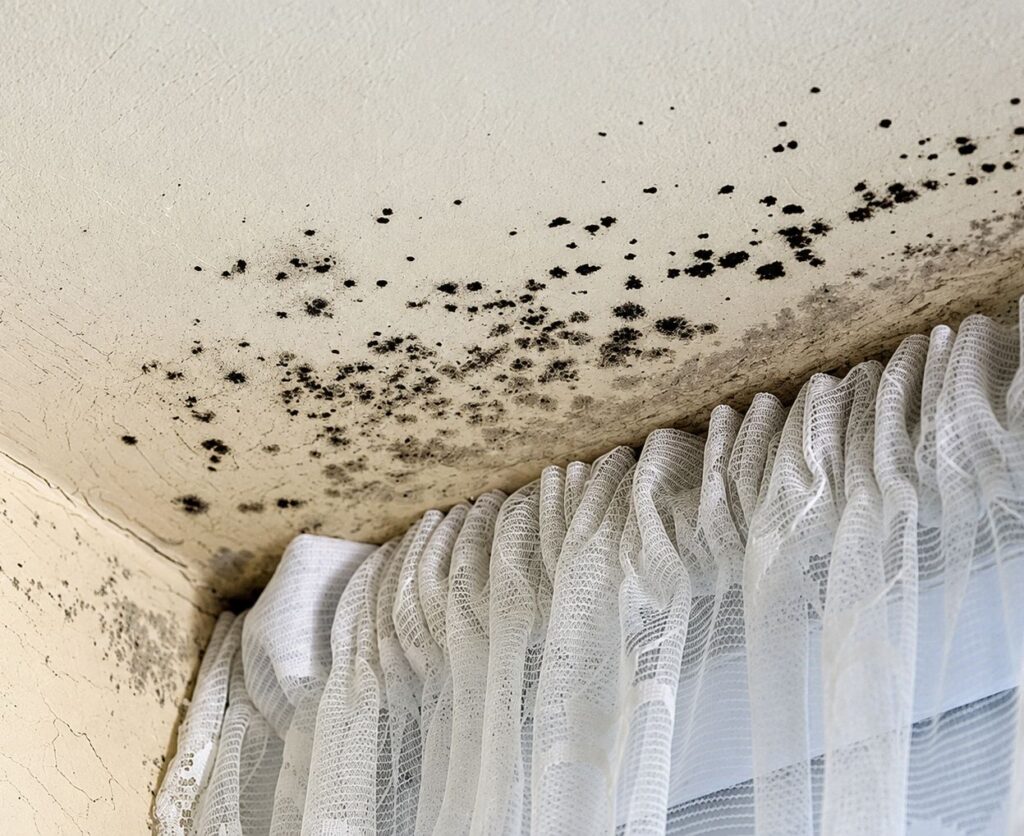
Once a home is running above the ideal indoor humidity level, the fix usually comes down to a handful of practical adjustments rather than a major renovation.
Step 1: Run the AC Consistently Instead of Cycling It
Letting a home heat up and then blasting the air conditioning back down actually works against humidity control, since a system cooling quickly does not run long enough to pull much moisture out of the air. A steady, moderate setting lets the AC dehumidify more effectively throughout the day.
Step 2: Add a Dehumidifier in High-Risk Rooms
Bathrooms, laundry rooms, and any room without strong airflow benefit from a dedicated dehumidifier. The best dehumidifier settings for mold prevention generally target 45 to 50 percent relative humidity, which gives a comfortable buffer below the point where mold risk increases.
Step 3: Improve Ventilation Where Moisture Concentrates
Exhaust fans in bathrooms and kitchens, and proper attic ventilation, move humid air out before it settles into surrounding materials. Running a bathroom fan for at least twenty minutes after a shower, rather than switching it off the moment someone steps out, clears far more residual moisture than most people assume. Attic ventilation that actually keeps mold out plays a bigger role in whole-home humidity than most homeowners realize, since a poorly vented attic traps heat and moisture that eventually pushes down into living spaces.
Step 4: Fix Leaks and Seal Gaps Promptly
A slow plumbing leak or a gap around a window can quietly add moisture to indoor air for weeks before anyone notices. Addressing these sources directly, rather than only running a dehumidifier to compensate, is how to lower humidity in your home in a way that lasts through Florida’s rainy season instead of just masking the symptom.
Step 5: Recheck Readings as the Seasons Change
Humidity control is not a one-time setup. Rainy season, hurricane season, and even a stretch of houseguests running extra showers can all push a home back above the ideal indoor humidity level after everything seemed under control. A quick hygrometer check once a month, or after any stretch of unusually wet weather, catches drift before it turns into a recurring problem.
Where Humidity Control Alone Falls Short
Holding indoor humidity in the right range genuinely reduces mold risk, but it is not a guarantee, and the EPA’s own guidance reflects that: there is no federal exposure limit for mold, and no humidity number that eliminates risk entirely rather than reducing it. Humidity control addresses the air throughout a home; it does nothing for a bulk-water source like a slow pipe leak, a failed roof flashing, or a clogged AC drain line, all of which can feed a localized mold colony even while the rest of the house reads a healthy 40 percent. A hygrometer near the thermostat also will not catch a pocket of trapped moisture behind a wall or under flooring, since those spaces do not exchange air with the room readily enough for a whole-room reading to reflect what is happening inside them. Treat a good hygrometer reading as one piece of evidence that the house is behaving, not as proof that no mold problem exists anywhere in it.
When High Humidity Has Already Caused a Mold Problem
Sometimes humidity control comes too late for one particular spot.
A musty smell persists even after humidity readings improve. If the air itself tests within the ideal indoor humidity level range but the smell has not gone away, growth has likely already established somewhere you cannot easily see, such as behind a baseboard or beneath flooring that absorbed moisture earlier.
Visible growth keeps returning in the same spot. Mold that regrows after cleaning, even in a room where humidity is now under control, usually means moisture reached a material deeply enough that surface cleaning cannot fully resolve it.
The issue is inside the HVAC system itself. Humidity problems that trace back to the air handler, ductwork, or drip pan need a closer look than a homeowner can typically manage alone. A mold inspection and testing visit can confirm whether growth has developed inside the system that is supposed to be controlling humidity in the first place.
A recent water event pushed humidity up suddenly. A leak, flood, or storm intrusion raises local humidity almost immediately, and drying the area out is only half the job if the moisture source has not been fully addressed.
Multiple rooms show signs at once instead of just one. A single humid bathroom is usually a ventilation fix. Musty smells or condensation showing up in several unrelated rooms at the same time points to a whole-house humidity or HVAC issue that needs a broader look than spot-treating each room individually.
Final Thoughts
Holding the ideal indoor humidity level between 30 and 50 percent is one of the simplest, most effective habits a Florida homeowner can build against mold, and the EPA’s own guidance backs that range specifically. Measuring it with a hygrometer, running the AC consistently, and addressing leaks quickly go a long way, and rechecking that number as the seasons change keeps a home from drifting back out of range. A musty smell or recurring growth that persists even after humidity is under control usually means the problem has already moved past a simple adjustment.
The team at The Mold Guys provides mold inspection, testing, and mold removal across Southwest and Central Florida. With over 25 years of experience managing the region’s humidity-driven mold problems and certification through the I.I.C.R.C and I.I.A.Q.C, they know exactly where moisture tends to hide once it gets past a homeowner’s control. Contact The Mold Guys today if your humidity readings will not come down or a musty smell has not cleared despite your best efforts.
FAQs
Q: What is the ideal indoor humidity level to prevent mold?
A: Most homes should stay between 30 and 50 percent relative humidity, and the EPA’s mold guidance sets 60 percent as the outer ceiling not to cross. Florida homes often do better closer to 40 percent given the state’s consistently humid outdoor air, and a hygrometer is the most reliable way to confirm your actual reading.
Q: How can I tell if my house has high humidity without a hygrometer?
A: Condensation on windows or mirrors, a musty smell that returns after cleaning, sticking doors or drawers, and clammy air even with the AC running are all common signs of high humidity in your house. Any one of these on its own is worth investigating, and two or more together usually confirm the problem.
Q: What are the best dehumidifier settings for mold prevention?
A: Setting a dehumidifier to maintain 45 to 50 percent relative humidity generally keeps a room safely below the threshold where mold risk increases. Rooms with less natural airflow, like bathrooms and laundry rooms, typically need the most consistent dehumidifier use, and emptying or draining the unit regularly keeps it running at full effectiveness.
Q: How to lower humidity in your home if the AC alone is not enough?
A: Running the air conditioning consistently rather than letting it cycle, adding a dehumidifier to high-moisture rooms, improving ventilation in bathrooms and attics, and fixing leaks promptly are the most effective combined steps. Addressing the moisture source directly works better long-term than relying on any single fix.
Q: Can indoor humidity be too low as well as too high?
A: Yes, dropping well under 30 percent can dry out sinuses, wood furniture, and flooring, and it is not necessary for mold prevention once a home is already within the 30 to 50 percent range. The goal is a stable, moderate level rather than the lowest number possible, so running a dehumidifier or AC aggressively past that point offers no additional protection against mold.