
The signs of water damage under concrete floor slabs usually show up in the flooring first: a tile that sounds hollow, a warm patch in the hallway, carpet that stays damp, or a water bill that climbs for no reason. A slab leak is a break in a water line that runs below or inside the concrete foundation, and because the pipe is buried, the damage spreads out of sight. In Florida, where homes are commonly built on slabs and finished with tile or vinyl, these clues are easy to miss until the floor itself starts to fail.
This guide covers why slab leaks stay hidden, the signs to look for, how to tell a leak from normal slab moisture, what happens once a leak is found, and where mold fits in.
Why Slab Leaks Stay Hidden
A leak in a wall or ceiling has somewhere to go. It drips, stains drywall, and eventually shows itself. Water under a slab has nowhere obvious to surface, so it spreads through the soil and fill beneath the concrete and soaks up into the slab from below.
Water Travels Before It Shows
The spot where you notice damage is not always where the pipe broke. Water follows the path of least resistance under the slab, which can be along the pipe trench, toward a low corner, or out to the edge of the foundation. A damp baseboard in the living room can trace back to a line under the kitchen. This is one reason the signs of water damage behind a wall and the signs under a floor can look alike at first.
Hard Flooring Masks the Moisture
Ceramic and porcelain tile do not absorb much water, so the surface can stay dry while the grout lines, thinset, and slab underneath stay wet for weeks. Vinyl plank and laminate act like a lid, trapping moisture against the concrete. Our guide on what causes mold under vinyl plank flooring explains why that trapped layer becomes a growth zone.
Signs of Water Damage Under Concrete Floor
No single clue proves a slab leak. A cluster of them, especially when they appear together in one part of the house, is what points under the floor.
Sign | What You Notice | What It Can Point To |
Warm spot | One area of tile feels warm underfoot | A leak on a hot water line |
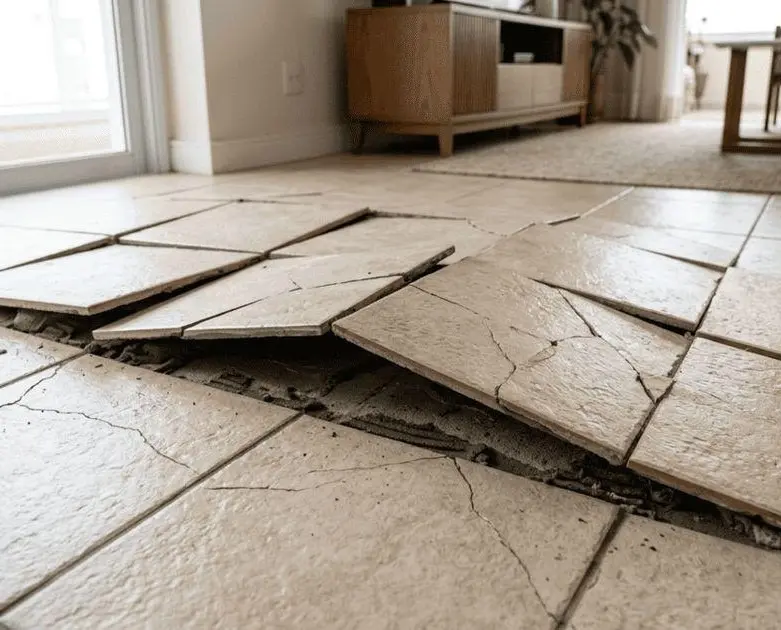
Lifting or cracked flooring | Tiles pop, grout cracks, planks cup or separate | Moisture moving up through the slab |
Damp carpet or pad | A patch stays wet with no spill nearby | Water rising from below the carpet |
Musty odor at floor level | Smell is strongest near baseboards | Mold growth under flooring or behind trim |
Running water sound | Hissing or flow with every tap off | Water escaping from a pressurized line |
Meter moves with water off | Reading changes over a quiet period | A leak somewhere in the supply system |
Warm Spots on Tile
Hot water lines run under kitchens, bathrooms, and laundry rooms in a slab home. When one of those lines leaks, the escaping water heats the concrete above it, and the floor feels warm in a spot that has nothing to do with sunlight or a heating vent. Cold water leaks give no such clue, so a floor without warm spots does not rule out a slab leak.
Flooring That Lifts, Cracks, or Cups
Moisture coming up through concrete breaks down flooring adhesive and swells wood and laminate. The National Ready Mixed Concrete Association (NRMCA) lists vinyl tile, wood, resilient sheet flooring, and carpet as the coverings most affected by slab moisture. On tile, the first sign tends to be a hollow sound when you tap it, followed by cracked grout and tiles that rock.
Damp Carpet and Musty Odor
Carpet over a wet slab can feel dry on top while the pad underneath holds water. A musty smell that is strongest near the floor, especially along baseboards, usually means growth has already started in the pad or behind trim. Mold can begin to grow within 24 to 48 hours of a water event, as covered in how long it takes mold to start growing.
Sounds and Water Bills
A hissing or rushing sound with every fixture off is worth investigating. So is a bill that rises when your habits have not changed. The EPA WaterSense program estimates that 10 percent of homes have leaks wasting 90 gallons or more per day, and a pressurized line under a slab can run around the clock.
Leak or Ordinary Slab Moisture
Here is the part that surprises homeowners: every slab on the ground holds some moisture. NRMCA notes that the soil under a slab on grade measures close to 100 percent relative humidity no matter where the building is located, and that groundwater can rise into the concrete by capillary action when fine soil sits below it. Florida’s high water table makes that rise more likely.
That means damp flooring alone does not prove a plumbing leak. Two simple checks help separate the two causes.
The Water Meter Check
EPA WaterSense recommends reading your water meter before and after a two hour period when no water is being used. If the reading changes at all, water is leaving the system somewhere. Turn off the irrigation system and ice maker first so they do not skew the result. A moving meter does not tell you where the leak is, but it confirms there is one.
The Plastic Sheet Check
NRMCA describes a simple test where an 18 by 18 inch plastic sheet is taped tightly to bare concrete and left for at least 16 hours. Moisture collecting underneath shows that water is coming up through the slab. If the plastic sheet is wet but the meter holds steady, the cause is more likely groundwater or vapor than a broken line. If both show water, a slab leak becomes the leading suspect. NRMCA also notes that a dry result does not guarantee the slab is dry deeper down, so treat it as a clue, not a verdict.
What Happens After a Leak Is Found
A licensed plumber locates and repairs the broken line, either by opening the slab at the leak or by rerouting the pipe through the walls or attic. That stops new water. It does not dry the water already in the slab, the flooring, and the bottom of the walls.
That is where water restoration starts. A proper water damage restoration job measures moisture across the floor and lower walls, removes flooring and baseboards that cannot dry in place, and runs drying equipment until readings return to normal. Concrete releases water slowly, so the slab can stay wet well after the surface feels dry.
Before the plumber arrives, a few steps limit the damage:
- Shut off the main water valve if the meter shows a leak and you cannot isolate it.
- Turn off the water heater if you suspect a hot water line, following the manufacturer’s instructions.
- Take photos of warm spots, lifted flooring, and stains for your insurance claim before anything is removed.
- Pull back area rugs and move furniture off damp areas so they do not wick up more water.
- Keep the AC running to pull humidity out of the air while you wait.
Why New Flooring Has to Wait
Flooring manufacturers set maximum moisture levels a slab must meet before their products go down. NRMCA notes that even new concrete can take weeks to months to dry to those levels in good indoor conditions. A slab soaked by a leak has to dry out too, and nobody can tell by touch when it is ready. Installing new tile, vinyl, or wood over a slab that still reads wet invites the same adhesive failure and mold growth you just paid to fix. Ask for moisture readings in writing before the new floor goes in.
Where Mold Fits In
Water trapped under tile, vinyl, or carpet creates the conditions for mold growth: moisture, warmth, and organic material in adhesive, carpet pad, and the paper face of drywall. The longer a slab leak runs before anyone finds it, the more likely flooring and the bottom few inches of the walls need to come out.
A mold inspection after a slab leak checks the areas that drying alone will not fix, including the back of baseboards, the bottom of drywall, and the underside of carpet pad. If carpet was involved, our guide on professional mold removal for carpet covers when it can be cleaned and when it has to go. Where growth covers more than 10 square feet, Florida law treats the cleanup as licensed mold remediation.
There are limits to what any of this can tell you before the floor is opened. Thermal cameras show warm water but not cold, moisture meters read the surface more reliably than the inside of the slab, and some leaks only run when a fixture is in use. Expect the full extent of the damage to become clear once flooring comes up.
Protecting Your Floors After a Slab Leak
A slab leak rarely announces itself, but warm tile, lifting floors, a musty smell at baseboard level, and a meter that moves with everything off are strong signals together. Catching them early keeps the job to drying and a section of flooring instead of a full mold removal project.
The Mold Guys handle water damage and mold cleanup for homes across Southwest and Central Florida, from Tampa to Naples. If your floors are showing any of these signs, Contact us to schedule a free consultation.
Sources
- EPA WaterSense publishes household leak facts and the two hour water meter check for finding hidden leaks.
- National Ready Mixed Concrete Association explains where concrete slab moisture comes from, how it damages flooring, and how it is tested.
FAQs
Q: What are the signs of water damage under concrete floor slabs?
A: Look for warm spots on tile, cracked grout or tiles that sound hollow, cupping wood or vinyl, damp carpet with no spill nearby, a musty smell near baseboards, the sound of running water with taps off, and a water meter that moves when nothing is in use.
Q: Can a slab leak cause mold?
A: Yes. Water trapped under tile, vinyl, or carpet keeps adhesive, carpet pad, and the bottom of drywall wet, which gives mold what it needs. Mold can start within 24 to 48 hours, so drying and inspection should follow the plumbing repair quickly.
Q: Is damp concrete always a sign of a leak?
A: No. Soil under a slab sits close to 100 percent relative humidity, and groundwater can rise into concrete on its own. A water meter that moves while all water is off is the clearer sign that a plumbing line is leaking.
Q: Does a slab leak always make the floor warm?
A: Only when the leak is on a hot water line. Cold water leaks do not change floor temperature, so a floor without warm spots can still have a slab leak. A meter check and moisture readings give a more complete picture.
Q: Who fixes water damage from a slab leak?
A: A licensed plumber repairs the broken line. A water damage restoration company then dries the slab and walls, removes flooring that cannot be saved, and checks for mold so the damage does not keep spreading after the leak is fixed.