
Mold removal in commercial buildings follows the same basic rule as any home job: find the water, remove what is growing, and dry the structure so it does not come back. What changes in an office, clinic, or retail space is everything around that rule. Staff and customers are in the building every day, the air handler serves rooms that have nothing to do with the problem, and Florida law treats anything over 10 square feet as licensed work. Getting those pieces right is what keeps a small mold problem from turning into lost workdays.
This guide covers why offices hide mold longer than homes, how commercial mold removal is sized, what Florida law adds for business owners, how to keep your business open during the work, and where removal alone falls short.
Why Offices Hide Mold Longer Than Homes
A homeowner sees every room of the house every week. In a commercial space, the areas where mold starts are usually the ones nobody visits: the space above a drop ceiling, the closet holding the air handler, the back of a wall behind a filing cabinet, or the carpet tiles under a break room sink.
The HVAC System Moves Air Between Rooms
In a typical small office, one system serves the entire floor. If a coil, drain pan, or section of duct stays wet, the system can carry spores and musty odor to rooms that have no visible growth at all. Federal remediation guidance for commercial buildings includes photos of exactly this pattern, with mold on a ceiling air diffuser and contaminated insulation inside an air handler cover. Our earlier guide on getting rid of mold in AC ducts explains how condensation builds inside duct runs in Florida humidity.
Drop Ceilings and Wall Finishes Cover the Damage
Ceiling tiles absorb water from a slow roof or plumbing leak and can stain long after the leak itself has dried. Wallboard is worse. The EPA guide shows a wall where the front face looks fine while the back side is covered with growth. Vinyl wall coverings, common in medical offices and hotels, trap moisture against drywall in the same way. If you are seeing staining without a clear source, the signs of hidden mold behind walls are worth checking before anyone opens a wall.
Maintenance Has No Single Owner
In a leased space, the landlord may own the roof and the air handler while the tenant owns the carpet and the break room. That split slows down reporting. The EPA guide notes that delayed or insufficient maintenance is associated with moisture problems in large buildings, and a leak that sits for weeks while two parties sort out responsibility is exactly how that happens. Mold can begin growing within 24 to 48 hours of water damage, as we covered in how long it takes mold to start growing.
How Mold Removal in Commercial Buildings Is Sized
Before any work starts, a remediation plan has to answer one question: how much material is affected. That number drives containment, protective equipment, and how much of the building has to change its routine. A proper mold inspection measures the affected area and looks for the moisture source, since visible growth can be only part of the total.
The EPA guide groups jobs into three size categories based on total surface area affected.
Affected Area | EPA Size Category | Containment Guidance | What It Means for Your Office |
Less than 10 square feet | Small | None required | Can usually be handled after hours with minimal disruption |
10 to 100 square feet | Medium | Limited, based on professional judgment | Part of the space is sealed off and air handling is adjusted |
More than 100 square feet | Large | Full, based on professional judgment | Plan for sections of the building to be closed during work |
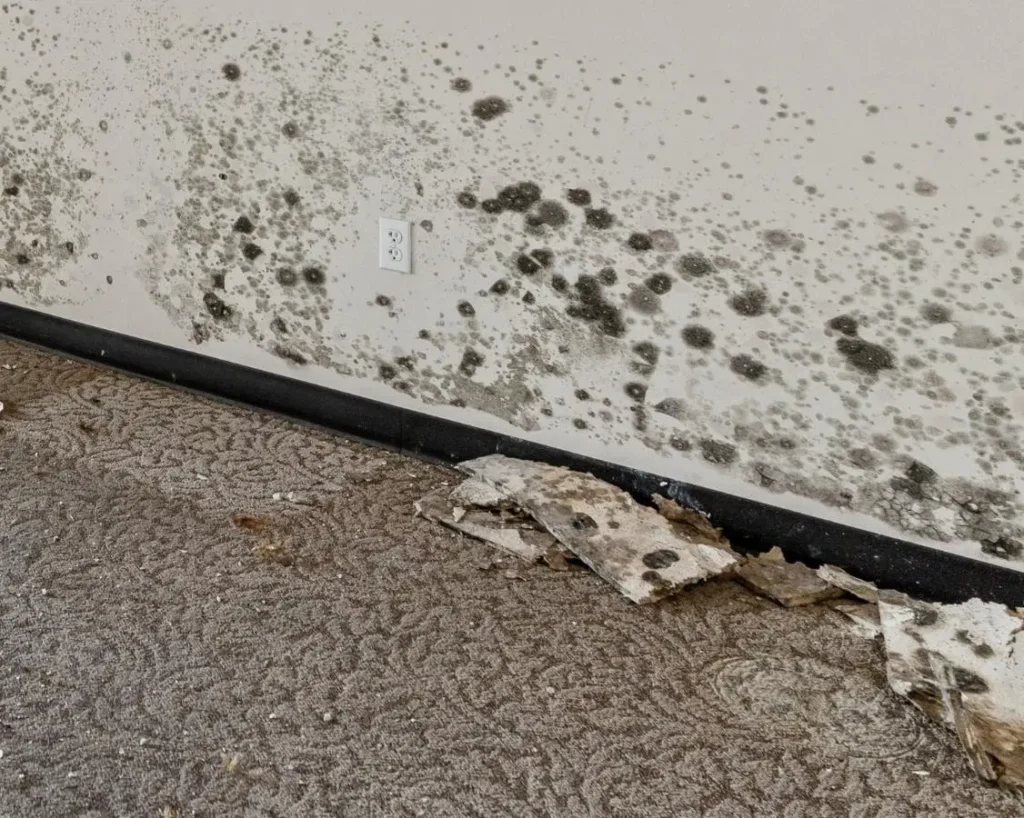
The EPA is clear that these categories exist to help plan the work, not because research shows a particular method is required at a particular square footage. Professional judgment still decides the final plan. The guide also calls for a more cautious approach in four situations: when a particularly toxic species is suspected, when extensive hidden mold is expected in places like the HVAC system or behind vinyl wallpaper, when spores are likely to become airborne during removal, and when people with severe allergies or asthma are in the building.
That last point matters for offices. A team of 20 people is more likely to include someone with asthma than a household of three, so commercial mold remediation tends to use more containment than the square footage alone would suggest.
What Florida Law Adds for Business Owners
The EPA guide is a recommendation. The EPA does not regulate mold in indoor air, and there is no federal limit on spore counts. Florida, however, does license the people who do the work.
The 10 Square Foot Line
Under Florida Statute 468.8411, mold remediation means the removal, cleaning, sanitizing, demolition, or other treatment of mold or mold contaminated material greater than 10 square feet. Below that threshold, a maintenance worker can clean a small patch. Above it, the work falls under state licensing. The same 10 square foot line is where the EPA small category ends, which makes it a practical point for deciding when to call in professionals.
Licenses Belong to People, Not Companies
The Florida Department of Business and Professional Regulation licenses individual mold remediators and assessors, not businesses. When you hire a company, the useful question is which licensed person will supervise your job. You can look up any license number on the DBPR website before work begins.
Insurance Requirements
DBPR also requires each licensed mold remediator to carry general liability insurance of at least $1,000,000 that specifically covers mold related claims, either personally or by being named on the company policy. Asking for a certificate of insurance that names the licensed remediator is a normal request for any commercial job.
Keeping Your Business Open During Removal
For a small business, the biggest worry is not the mold. It is closing for a week. Good planning can shrink that window considerably.
The EPA guide recommends scheduling remediation during off hours when possible, so occupants are less likely to be affected. For an office that closes at 6 p.m., that can mean crews working evenings and weekends with containment left in place during the day. It also stresses communication with building occupants. People worry when they see plastic sheeting and hear the word mold, and a short, factual update about what is being removed and where keeps the rumors down.
Before the crew arrives, a few steps make the work faster and safer:
- Move files, electronics, and personal items out of the affected rooms, since paper and cardboard can absorb spores and may have to be discarded if they stay.
- Tell employees which areas will be closed and for how long, and ask anyone with asthma or allergies to let you know.
- Confirm with your landlord or property manager who controls the HVAC system so it can be shut down or isolated for the affected zone.
- Locate and stop the water source, or at least document it with photos for your insurance claim.
- Keep a clear path from an exterior door to the work area so debris can leave the building without passing through occupied rooms.
Once removal is finished and the space has dried, you may also want to confirm the result. Post removal mold testing can compare indoor air with outdoor air to show whether spore levels have returned to normal background levels, which is useful when staff or tenants need reassurance.
Where Mold Removal Alone Falls Short
Removing growth without fixing the moisture source is the main reason mold comes back in commercial spaces. The EPA guide puts fixing the water or humidity problem first in its remediation steps, ahead of cleanup. In Florida offices, that source tends to be an AC system that runs on a timer, a roof leak over a drop ceiling, or a slow plumbing leak in a shared wall.
Scope can also change mid job. The EPA guide says that if hidden mold is discovered during remediation, the plan should be revised to cover the total affected area. Business owners should expect that a wall opened to remove 30 square feet of visible growth may reveal more behind it, and that the timeline may stretch.
Finally, there is no number that proves a building is safe. Because no federal standard exists for indoor mold, air sampling shows comparison and trends, not a pass or fail grade. Lasting results come from removing damaged material, fixing the moisture source, and keeping indoor air quality under control afterward with proper humidity and HVAC maintenance. Our guide on symptoms of mold allergies covers what staff may notice if a problem returns.
Getting Your Office Back to Business
Mold damage in a commercial space is a scheduling problem as much as a cleaning problem. Sizing the job correctly, confirming who holds the license, and planning around your hours keeps the work contained and your doors open. For larger jobs, ask about the mold removal process and expected timeline before you sign anything.
The Mold Guys handle mold removal for homes and businesses across Southwest and Central Florida, from Tampa to Naples. If you have spotted staining, a musty smell, or water damage in your office, Contact us to schedule a free consultation.
Sources
- US EPA publishes Mold Remediation in Schools and Commercial Buildings, the federal guidance on sizing, containment, and occupant communication for commercial jobs.
- The Florida Senate hosts Florida Statute 468.8411, which defines mold remediation as work on more than 10 square feet.
- Florida DBPR explains how the state licenses individual mold remediators and the insurance they must carry.
FAQs
Q: Who handles mold removal in commercial buildings in Florida?
A: Any job over 10 square feet counts as mold remediation under Florida law and requires a licensed mold remediator. The state licenses individuals, not companies, so ask which licensed person will supervise your job and verify the license number on the DBPR website.
Q: Can my business stay open during mold remediation?
A: Yes, if the work is planned around your hours. EPA guidance recommends scheduling work after hours when possible and sealing off the affected area with containment. Small jobs under 10 square feet rarely require closing, while larger jobs may close specific rooms or zones for several days.
Q: Does mold in an office spread through the air conditioning?
A: It can. When mold grows on a coil, drain pan, or inside ductwork, the system can carry spores and odor to other rooms. That is why commercial jobs usually include an inspection of the HVAC system and shutting it down for the affected zone during removal.
Q: Is there a legal limit for mold in office air?
A: No. The EPA does not regulate mold in indoor air, and no federal limit on spore counts exists. Air testing compares indoor levels with outdoor levels to show whether a problem remains, rather than giving a pass or fail result.
Q: Why does mold keep coming back in our office?
A: Recurring mold usually means the moisture source was never fixed. Common causes in Florida offices include AC systems that shut off after hours, roof leaks above drop ceilings, and slow plumbing leaks inside walls. Removal works only once the water stops.