
Mold in a bedroom tends to grow in spots nobody looks at regularly: behind a headboard pushed against an exterior wall, inside a closet that rarely gets opened, or along a window frame hidden by curtains. People spend more hours in this one room than any other in the house, yet a bedroom’s closed-door habits and low airflow are exactly what let humidity and moisture linger there longer than they would elsewhere, so a problem can take hold for months before anyone notices.
Someone can keep a spotless bedroom by every visible measure and still be sleeping a few feet from a growing problem, simply because the places mold prefers are the same places a bedroom is arranged to keep out of sight. We will walk through why bedrooms are so easy for mold to go unnoticed in, how it can quietly affect sleep and health, and the practical steps that catch and prevent it before it becomes a bigger problem.
Why Bedrooms Are an Easy Place for Mold to Go Unnoticed
Several ordinary bedroom habits combine to create conditions mold can take advantage of without anyone realizing it.
Closed Doors Limit Airflow
Bedroom doors typically stay closed overnight and often during the day as well, cutting off the air circulation that helps the rest of the house dry out naturally. Without that airflow, any humidity in the room has fewer chances to escape before it settles into fabric, carpet, or drywall.
Furniture Blocks Walls From View and Airflow
A bed, dresser, or bookshelf pushed flush against an exterior wall blocks both visual inspection and air movement in that spot. Mold that develops on drywall behind a piece of furniture like this can spread for a long time before anyone moves the furniture far enough to notice it.
Closets Trap Humidity in an Enclosed Space
A bedroom closet is essentially a small, sealed room within a room, one that rarely gets opened wide enough to air out. Clothing, shoes, and stored items packed tightly together also reduce airflow further, letting any humidity that gets in stay trapped against fabric and closet walls.
Carpet, Rugs, and Curtains Hold Onto Moisture Longer
Bedrooms tend to have more soft furnishings than other rooms: thicker carpet, area rugs, heavier curtains, and upholstered headboards. Every one of those materials absorbs ambient moisture and releases it slowly, so a bedroom can hold onto humidity well after the air itself feels dry.
How Mold in a Bedroom Disrupts Sleep and Health
Because people spend roughly a third of their day in this one room, even a moderate mold problem here can have an outsized effect on how someone feels day to day.
Overnight Spore Exposure Adds Up
A person sleeping in a room with an active mold problem is breathing in spores for seven or eight hours at a stretch, night after night, far longer than the brief exposure they would get walking through a musty bathroom. A World Health Organization review of indoor dampness and mold research found consistent associations between damp, moldy housing and respiratory symptoms across dozens of studies, with the strongest evidence tied to current asthma, coughing, and wheezing. One estimate in that review put the potential share of U.S. asthma cases attributable to residential dampness and mold, if the relationship proves causal, at close to a fifth. Sustained overnight exposure is part of how mold affects sleep quality, since low-grade congestion or throat irritation can lead to lighter, more interrupted sleep without the person necessarily connecting it to the room itself.
Symptoms That Feel Worse in the Morning
Waking up with a stuffy nose, scratchy throat, or dull headache that improves within an hour of being awake and moving around is a pattern worth paying attention to. It often points to something in the bedroom specifically, since eight hours of continuous exposure overnight is enough to produce symptoms that a shorter daytime exposure elsewhere in the house would not.
A Musty Smell That Undermines Sleep on Its Own
Even setting aside physical symptoms, a lingering musty odor in the one room meant for rest can make it harder to relax and fall asleep in the first place. People often adjust to a smell they live with daily without registering how much it has become part of the environment until it is gone.
Children and Household Members With Existing Sensitivities
Children and anyone with asthma or existing allergies are more likely to notice, and be affected by, mold in a bedroom before other household members do. The same WHO review found some of its strongest evidence in children specifically: one study it cites linked the severity of moisture damage in a home to a roughly two-and-a-half to four-times higher likelihood of asthma developing in young children, depending on how severe the damage was. A child’s bedroom that runs more humid than the rest of the house, often because it gets less attention during routine upkeep, deserves the same scrutiny as any adult’s room.
Signs of Mold in a Bedroom You Might Be Missing
Because bedroom mold often develops out of direct sight, these signs of mold in a bedroom tend to show up before any visible spot does.
A musty smell that is strongest right when you walk in. A closed-door room concentrates odor more than an open living space does, so a bedroom-specific smell that fades once the door has been open a while is a meaningful clue.
Discoloration on the wall behind the headboard or a large piece of furniture. This spot rarely gets checked during routine cleaning, so pulling furniture away from the wall every so often is one of the only ways to catch growth here early.
Mold appearing on stored clothing or shoes in the closet. Removing mold from fabric and clothing addresses the immediate problem, but recurring growth on stored items usually means the closet itself is holding too much humidity rather than any one garment being the source.
Allergy or respiratory symptoms that are noticeably worse at night or first thing in the morning. A pattern tied specifically to time spent in the bedroom, rather than symptoms that stay constant throughout the day, points toward the room itself as a contributing source.
Condensation on a bedroom window that other rooms in the house do not show. A bedroom window along a shaded or poorly ventilated wall can run more humid than windows elsewhere, and consistent condensation there is an early warning sign worth acting on.
Waking up with symptoms that ease within an hour of leaving the room. This is one of the more telling signs of mold in a bedroom specifically, since it points toward that one space rather than the house in general, though it is a pattern worth tracking rather than a confirmed diagnosis on its own.
Bedroom Mold Hotspots at a Glance
The table below highlights the bedroom locations most prone to hidden mold and why each one is at risk.
Bedroom Location | Why It Happens | Risk Level |
Behind the headboard | Blocked airflow against an exterior wall | High |
Inside the closet | Enclosed space with little to no ventilation | High |
Under the bed | Low airflow and stored items blocking circulation | Moderate |
Window sill and frame | Condensation from indoor and outdoor temperature gaps | Moderate |
AC vent or return | Condensation buildup around ductwork connections | Moderate |
Checking the high-risk spots first, behind the headboard and inside the closet, catches most bedroom mold cases before they spread further. The moderate-risk spots are worth a quick seasonal glance rather than constant monitoring, since they tend to develop more slowly and give more warning before becoming a real problem.
Where Bedroom Mold Is Harder to Judge Than It Looks
Symptoms that improve away from a room are a genuinely useful clue, but they are not a diagnosis. The WHO review behind the statistics above is also candid about its own limits: while the association between damp, moldy housing and respiratory symptoms is well documented across dozens of studies, the exact biological mechanism is still not fully settled, and both allergic and non-allergic responses appear to play a role in different people. That means two households with the same amount of visible growth can react differently, and a household with no visible growth at all can still have symptoms tied to hidden moisture the WHO’s own research would not be able to explain from symptoms alone. Waking up congested and feeling better by lunchtime is worth tracking for a week or two, and it is a real reason to look closer. It is not, on its own, proof of what is happening behind the headboard, and only an actual inspection settles that.
How to Reduce Bedroom Mold Risk
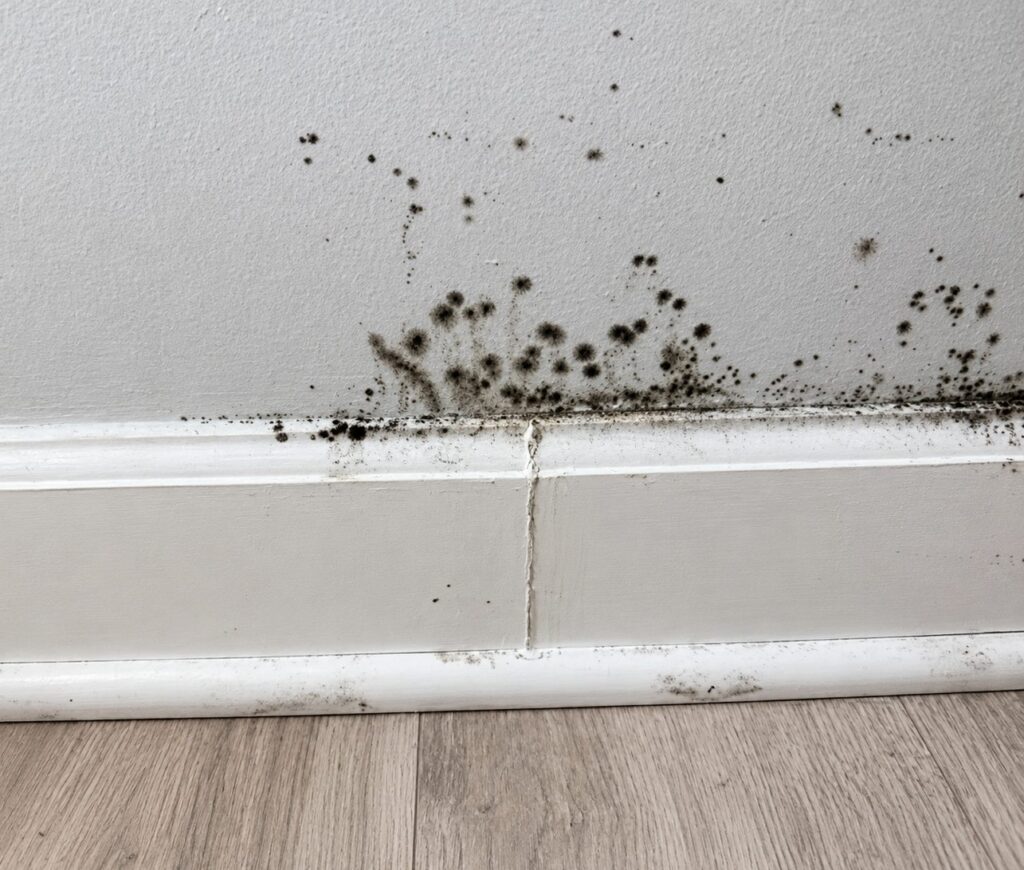
A few consistent habits go a long way toward keeping a bedroom from becoming the hidden source of a larger mold issue.
Step 1: Pull Furniture a Few Inches From Exterior Walls
Leaving even two or three inches of space between a bed or dresser and an exterior wall allows enough airflow to keep moisture from settling in that gap. It also makes it far easier to spot a problem early during a routine glance behind the furniture.
Step 2: Crack the Closet Door or Add a Small Vent
Leaving a closet door open a few inches, or installing a louvered door or small vent, lets trapped humidity escape instead of building up around stored clothing and shoes.
Step 3: Keep Bedroom Humidity in Check
A small dehumidifier, or simply running the home’s air conditioning consistently, keeps bedroom humidity from climbing overnight, which matters since a closed door limits how much the rest of the house’s dehumidified air can circulate into the room.
Step 4: Wash Bedding and Curtains Regularly
Fabric holds onto humidity and dust in ways hard surfaces do not, so washing sheets, pillowcases, and curtains on a regular schedule removes moisture and debris before they have a chance to support growth. Heavier items like a comforter or a rug benefit from being aired outside on a dry day a few times a year, since a quick wash cycle does not always fully dry thick fabric all the way through.
Step 5: Check Window Seals Before Rainy Season
A worn or gapped window seal lets both outdoor humidity and occasional water intrusion into the room. Inspecting and resealing bedroom windows before Florida’s rainy season begins prevents one of the more common seasonal triggers for bedroom mold.
Step 6: Test Before Assuming a Spot Is Harmless
A small discolored patch behind furniture is easy to dismiss as dust or a stain. Testing for toxic black mold rather than guessing takes only a few minutes and settles the question before deciding whether a simple wipe-down is enough or something more is needed.
When Bedroom Mold Needs a Professional Look
A handful of situations mean a bedroom mold issue has moved past what routine cleaning and prevention habits can fix.
The smell or discoloration keeps returning after cleaning. Recurring growth in the same spot behind furniture or in the closet usually means moisture is reaching the material from somewhere a surface cleaning cannot address.
Someone in the household has symptoms specifically tied to sleeping in that room. Morning congestion, headaches, or skin irritation that consistently improve when someone sleeps elsewhere for a night or two point toward the bedroom itself as a contributing source, and this pattern is worth tracking for a week or two before assuming it is unrelated.
Discoloration is spreading beyond the original spot. Growth that expands along a wall, baseboard, or closet corner over a period of weeks suggests an ongoing moisture source rather than a one-time issue.
More than one bedroom in the house shows the same pattern. Mold behind bed and furniture appearing in multiple rooms at once usually points to a whole-house humidity or ventilation issue rather than something specific to one room’s habits.
A mold inspection and testing visit has not been done and the cause is unclear. When the source of moisture behind a wall or inside a closet is not obvious, testing is a faster and more reliable path than guessing at fixes one at a time, and it saves the trouble of moving furniture repeatedly to chase a smell that keeps shifting.
Final Thoughts
Mold in a bedroom is easy to miss precisely because the room is built around comfort and closed doors rather than airflow and visibility, and that same closed-off quality is what lets moisture linger long enough to become a real problem. Pulling furniture away from the walls, keeping the closet ventilated, and paying attention to symptoms that improve away from the room are simple habits that catch it early, even though, as the research shows, symptoms alone can only point toward a problem rather than confirm one.
The team at The Mold Guys provides mold inspection, testing, and mold removal across Southwest and Central Florida. With over 25 years of experience finding moisture problems in the rooms homeowners check least often and certification through the I.I.C.R.C and I.I.A.Q.C, they know exactly where bedroom mold tends to hide. Contact The Mold Guys today if a musty bedroom smell or unexplained morning symptoms have not improved despite your best efforts.
FAQs
Q: What are the most common causes of mold in a bedroom?
A: Closed doors that limit airflow, furniture blocking exterior walls, and enclosed closets that trap humidity are the three most common causes. Each one creates a pocket of still, damp air that a more open, ventilated room would not hold onto as easily, and soft furnishings like carpet, curtains, and upholstered headboards make the problem worse by absorbing and slowly releasing that moisture.
Q: How mold affects sleep quality even before any symptoms appear?
A: A musty smell alone can make it harder to relax and fall asleep, and low-grade nighttime spore exposure can cause light congestion or throat irritation that fragments sleep without an obvious cause. Many people do not connect these effects to the room itself until the underlying growth is found and removed.
Q: What are the clearest signs of mold in a bedroom?
A: A musty smell that is strongest right when you enter, discoloration behind a headboard or large furniture, and allergy symptoms that are noticeably worse at night or in the morning are the most reliable indicators. Mold appearing on stored clothing in the closet is another common sign that is easy to overlook.
Q: How can I check for mold behind bed and furniture without moving everything out?
A: Pulling furniture just a few inches away from the wall is usually enough to visually inspect the area and check for discoloration or a musty smell without a full room rearrangement. Doing this every few months, especially for furniture against exterior walls, catches most problems early, and a flashlight makes it easier to spot subtle discoloration in a dim corner.
Q: When should bedroom mold be handled by a professional instead of cleaned at home?
A: If growth or odor keeps returning after cleaning, spreads beyond its original spot, or is paired with symptoms that clearly improve when someone sleeps in a different room, it is time to bring in a professional. A proper inspection can confirm what is happening behind a wall or inside a closet rather than leaving it to guesswork.