
Most homeowners book an inspection expecting someone to walk in, glance around, and tell them yes or no. A professional mold inspection and testing service is a lot more involved than that, and knowing what actually happens during one changes what you should expect to pay for and what you should expect to walk away with. Between the visual walkthrough, the moisture readings, the air and surface samples, and the written report that ties it all together, a real inspection produces evidence, not just an opinion.
That distinction matters more than most homeowners realize until they are the ones trying to sell a house, settle an insurance claim, or simply figure out why a room keeps smelling musty no matter how often it gets cleaned. A quick look and a guess will not hold up in any of those situations. A documented inspection will.
This guide walks through every stage of a professional mold inspection and testing service, the tools involved, what air and surface sampling actually tells you, and what a finished inspection report should include before you sign off on the next step.
What a Professional Mold Inspection and Testing Service Actually Includes
A complete inspection is built around three things happening in sequence: a visual and moisture-based assessment of the property, targeted sampling where the visual assessment cannot settle the question on its own, and a written report that turns everything found into something you can actually act on.
The Initial Consultation and Property Walkthrough
Every inspection starts with a conversation, not a checklist. A technician asks about the history of the property: recent leaks, past water damage, musty smells, humidity complaints, or health symptoms that seem tied to a specific room. That context shapes where the inspection focuses first, since a home with a known roof leak gets a different starting point than one where the only complaint is a vague smell in a hallway.
From there, the technician walks the property room by room, looking at areas most prone to hidden moisture: under sinks, around window frames, behind large furniture, in closets, in the attic, and near HVAC connections. This visual pass is where a mold inspection and testing service earns its name, since a trained eye catches subtle discoloration, staining patterns, and bubbling paint that an untrained homeowner walks past every day without noticing.
Moisture Detection Before Any Sampling Happens
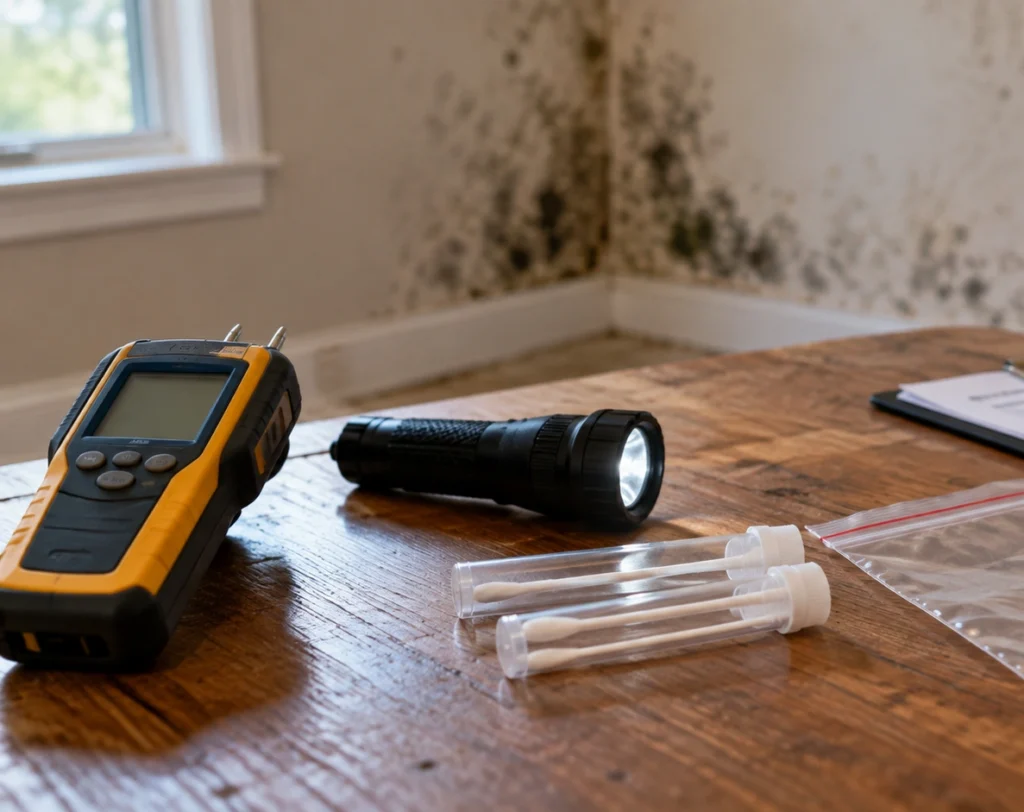
Before any sample gets collected, a technician uses moisture meters and thermal imaging to find where water is actually sitting, not just where mold happens to be visible. Thermal imaging shows temperature differences that often point to damp material behind a wall or ceiling long before a stain ever becomes visible on the surface. A moisture meter then confirms whether a suspicious area is actually wet or just reading cold on camera.
This step is why a real inspection uncovers problems a homeowner’s own walkthrough misses. Mold behind a wall does not show up to the naked eye, but the moisture feeding it does show up on a thermal camera and a moisture meter, which is exactly why this equipment gets used before any sample is taken rather than after.
Air Quality Testing and Surface Sampling
Not every inspection needs mold testing, but when the visual and moisture findings cannot settle the question on their own, air quality testing and surface sampling are what turn a suspicion into a confirmed answer.
How Air Samples Are Collected
Air quality testing works by pulling a measured volume of air through a small cassette that captures spores on a sticky slide, usually with one sample taken outdoors as a baseline and additional samples taken in the rooms of concern. Comparing an indoor reading against the outdoor baseline is what makes the result meaningful, since some level of mold spores exists in essentially all outdoor air. A count that is dramatically higher indoors than outdoors, or that shows a different type of mold indoors than what is naturally present outside, points toward an active indoor source rather than normal background levels.
How Surface Samples Are Collected
Surface sampling uses a swab, tape lift, or small physical sample taken directly from a suspicious spot, which is the more direct way to confirm what is actually growing on a specific piece of drywall, wood trim, or ductwork. This method matters most when a homeowner needs to know exactly what species is present, not just whether elevated spore counts exist somewhere in the home.
What Happens After Samples Are Sent to the Lab
Both air and surface samples go to an independent, accredited laboratory for analysis, which typically takes a few business days to return results. The lab identifies the mold species present and, for air samples, compares spore counts and types between the indoor and outdoor readings. Using an independent lab rather than in-house analysis matters for objectivity, particularly if the results ever need to hold up in an insurance claim or a real estate transaction.
Tools and Technology Used During a Mold Inspection
Tool | What It Detects | Why It Matters |
Thermal imaging camera | Temperature differences that suggest hidden moisture | Finds damp areas behind walls and ceilings before any visible sign appears |
Moisture meter | Actual moisture content inside a material | Confirms whether a suspicious area is genuinely wet, not just reading cold |
Hygrometer | Relative humidity in a room or cavity | Flags conditions favorable to mold even before growth is visible |
Air sampling pump and cassette | Airborne spore counts and types | Compares indoor air against an outdoor baseline to confirm an active source |
Borescope | Visual access inside wall cavities and tight spaces | Confirms what is actually growing behind a wall without demolition |
Each tool answers a different question, and a thorough inspection rarely relies on just one. A thermal camera might flag a suspicious area that a moisture meter then confirms is genuinely wet, which is what justifies opening a small access point with a borescope rather than tearing into a wall based on a single reading alone.
What the Final Mold Inspection Report Includes
The mold inspection report is the actual deliverable of the visit, and it is what separates a professional service from a verbal opinion given on the spot. A complete report should include:
- A summary of findings by room, including any visible growth, moisture readings, and areas of concern.
- Photos documenting each finding, so the property owner and any other party involved (an insurer, a buyer, a contractor) can see exactly what was observed.
- Lab results for any air or surface samples collected, including spore counts, species identification, and the indoor-to-outdoor comparison.
- A clear explanation of the likely moisture source behind any growth found, not just the growth itself.
- Recommendations for next steps, whether that means remediation, further investigation, or simply monitoring an area that does not yet require action.
A report missing any of these pieces is incomplete, and a homeowner relying on it for a real estate transaction or an insurance claim should ask for whatever is missing before treating the inspection as finished.
How Long a Professional Mold Inspection Takes
A straightforward inspection of an average home typically takes one to two hours on-site, though larger properties, homes with multiple areas of concern, or inspections that include extensive sampling can run longer. Lab turnaround for samples typically adds two to five business days before the final report is complete, since the samples have to travel to and be processed by an independent laboratory rather than analyzed on-site. Homeowners working against a deadline, such as a real estate closing, should factor that lab turnaround into their timeline rather than assuming the inspection is finished the moment the technician leaves.
Where Inspection and Testing Reach Their Limits
Testing is a genuinely useful tool, but it is not automatic, and being honest about that is part of doing this well. The EPA has not set exposure limits or airborne standards for mold, and it says plainly that when visible mold growth is already present and identified, testing is often unnecessary, since there is no federal number to test the result against in the first place. In that situation, the more useful next step is usually addressing the visible growth and its moisture source directly rather than paying for a lab result that will not change the recommended course of action.
Where testing earns its cost is when growth is not visible: a musty smell with no obvious source, a wall cavity suspected but not confirmed, or a real estate transaction where an objective, documented answer matters more than a visual impression. Air and surface sampling are also the only way to confirm what is happening inside a space you cannot see into without opening it up, which is exactly the situation a borescope and a lab result are built to resolve.
Signs an Inspection Is Worth Booking Rather Than Guessing
A few situations make a professional inspection worth the cost rather than relying on a homeowner’s own walkthrough:
- A musty smell that persists with no visible source anywhere in the home.
- Recent water damage from a leak, flood, or storm, even if no mold is visible yet.
- Buying or selling a property, where an objective, documented answer protects both sides of the transaction.
- Ongoing, unexplained allergy or respiratory symptoms that seem tied to a specific room or the home in general.
- A previous mold problem that was treated without ever confirming the underlying moisture source was fixed.
Any one of these is a reasonable reason to book an inspection rather than spend weeks guessing at what a smell or a stain actually means.
How The Mold Guys Approaches Every Inspection
The team at The Mold Guys builds every inspection around the specific property and the specific concern that prompted the call, rather than running the same fixed checklist regardless of what a homeowner actually reported. That means a visit prompted by a pre-purchase concern gets scoped differently than one prompted by a known leak, and sampling only gets recommended when the visual and moisture findings genuinely cannot answer the question on their own. Every report is built to be usable well beyond the day it is delivered, whether that means supporting an insurance claim, a real estate negotiation, or simply a clear plan for what to do next.
A Real Inspection Gives You an Answer, Not a Guess
A professional mold inspection and testing service is worth the cost specifically because it replaces a guess with documented evidence: what is actually growing, where the moisture is coming from, and what needs to happen next. Skipping that process in favor of a quick look usually just delays finding out the same information later, often after a problem has had more time to spread.
If you suspect a mold problem and want a documented answer rather than a guess, The Mold Guys provides mold inspection, testing, and mold removal across Southwest and Central Florida. With over 25 years of experience and certification through the I.I.C.R.C and I.I.A.Q.C, they know exactly what a thorough inspection needs to include. Contact The Mold Guys today to schedule one.
Sources
Mold Testing or Sampling, U.S. Environmental Protection Agency (accessed 2026). U.S. federal environmental agency. Supports these points: no EPA or other federal limits have been set for mold or mold spores, sampling is usually unnecessary when visible mold growth is already present, and sampling should be done by professionals with specific experience.
FAQs About Spore Trap Air Sampling for Mold, AIHA Indoor Environmental Quality Committee (hosted by the Navy and Marine Corps Public Health Center) (accessed 2026). Professional industrial hygiene association, hosted by the Navy and Marine Corps Public Health Center. Supports these points: molds are normally found in air both indoors and outdoors, indoor air samples are evaluated alongside outdoor samples taken at the same time, and a single sample cannot be considered representative of an area.
FAQs
Q: What does a professional mold inspection and testing service actually include?
A: A complete service includes a visual walkthrough, moisture detection with tools like thermal imaging and moisture meters, air and surface sampling when needed, lab analysis of any samples, and a written report documenting everything found along with recommendations for next steps.
Q: Is air quality testing always necessary during a mold inspection?
A: No. If mold is already visible and identified, the EPA notes that testing often will not change the recommended course of action, since there is no federal exposure standard to test against. Testing earns its value most when growth is suspected but not visible, or when an objective, documented result is needed for a transaction or a claim.
Q: How long does it take to get results back from a mold inspection?
A: The on-site portion typically takes one to two hours, but if air or surface samples are collected, lab turnaround usually adds two to five business days before the final report is complete. Anyone working against a deadline, such as a home sale, should plan around that lab turnaround time.
Q: What should be included in a mold inspection report?
A: A complete report includes a room-by-room summary of findings, photos documenting each issue, lab results for any samples collected, an explanation of the likely moisture source, and clear recommendations for next steps. A report missing any of these should be considered incomplete.
Q: Can I use a mold inspection report for an insurance claim or home sale?
A: Yes, and that is one of the main reasons to have an inspection performed by an independent, accredited service rather than relying on a visual guess. A documented report with lab-verified results carries far more weight with an insurer or a buyer than an opinion given without supporting evidence.