
Mold growing on a visible surface like bathroom tile or a basement wall is a problem you can see, assess, and treat. Mold growing inside a wall cavity is a different situation entirely. Hidden mold behind walls produces no visible patch to prompt action, yet it releases spores into your indoor air continuously and can compromise structural materials for months before any surface evidence appears. Recognizing the signs of hidden mold behind walls is one of the most important skills a homeowner can have, because by the time mold becomes visible on the surface of drywall, an established colony typically already exists well behind it.
The reason hidden wall mold is so common comes down to how water behaves inside a home. A leaking pipe inside a wall, condensation on a cold supply line, rain penetrating through a failed window seal, or storm water seeping through an exterior wall cavity all introduce moisture into spaces that never dry naturally without ventilation. In Florida’s warm humid climate, those enclosed spaces maintain the temperature and humidity conditions that mold needs to colonize building materials within days of moisture appearing. We will walk through every reliable indicator of mold in walls, the tools used in professional hidden mold detection, and what to do when your suspicion is confirmed.
Why Mold Grows Inside Walls
Understanding the specific mechanisms that allow mold to establish inside wall cavities helps you identify which areas of your home are most at risk and what conditions to watch for.
Plumbing Leaks Inside Wall Cavities
Supply lines and drain pipes running through wall cavities are among the most common sources of hidden wall mold. A pinhole leak in a copper supply line or a slow seep at a drain pipe joint introduces water into the wall cavity continuously over days or weeks. The enclosed space prevents evaporation, the wood framing and drywall paper provide organic food material, and the warm indoor temperature creates ideal mold growth conditions. Because the leak is inside the wall, nothing is visible at the surface until the drywall has been saturated long enough to produce staining or soft spots.
Exterior Wall Water Intrusion
Failed window seals, deteriorating exterior caulk, damaged siding, and cracked stucco all allow rainwater to enter exterior wall cavities during storm events. In Florida where storms are frequent and often bring wind-driven rain, these entry points represent a significant and recurring moisture source for mold in walls. Water that enters during a storm and cannot drain or evaporate from the enclosed cavity begins supporting mold growth between storm events.
Condensation on Cold Surfaces Inside Walls
In Florida’s climate, cold water supply lines running through warm wall cavities develop condensation on their exterior surface when ambient air contacts the cold pipe. This condensation drips onto the bottom plate and lower sections of the wall cavity, creating persistent moisture in an area that receives no airflow. Over time this creates an ideal mold habitat at the base of exterior and interior walls where cold plumbing runs.
Mold Basement Drywall and Below-Grade Walls
Basement and below-grade walls are particularly vulnerable because they sit in direct contact with or very close to soil that contains moisture year-round. Ground moisture migrates through concrete block walls and slab foundations continuously, introducing ambient humidity into wall cavities along basement and lower level perimeters. Mold basement drywall is a common consequence in Florida homes with finished lower levels where the drywall installation did not include adequate vapor barriers between the concrete and the finished wall surface.
HVAC Ductwork Condensation Affecting Adjacent Walls
Where HVAC ductwork runs through wall cavities, condensation from the cooled duct surface can drip onto surrounding structural materials. If ductwork is improperly insulated or if duct joints leak, this source of ongoing moisture can produce hidden mold in the wall sections adjacent to the duct run without any visible surface indication.
The Signs of Hidden Mold Behind Walls
These are the indicators that experienced professionals and attentive homeowners use to identify likely hidden mold before any visual confirmation is available.
A Persistent Musty Odor With No Visible Source
This is the earliest and most consistent indicator of hidden wall mold in homes. A musty or earthy smell that appears in a specific room or area of the home and does not go away with ventilation or cleaning, and for which no visible mold source can be identified, strongly suggests active mold growth in an enclosed space. The smell comes from microbial volatile organic compounds produced by active colonies as a metabolic byproduct.
The odor is often strongest near the base of walls, at electrical outlet covers on exterior walls, or near light switch plates, all locations where air from inside the wall cavity leaks into the room. If you place your nose near an electrical outlet cover and the musty smell is noticeably stronger there than in the open room, the source is almost certainly inside the wall.
Our guide on how to remove mold odor explains why this smell develops and why it cannot be eliminated without addressing the mold source producing it.
Discoloration or Staining on Wall Surfaces
Paint or drywall compound that shows yellowish, brownish, or gray discoloration that was not present previously indicates moisture migrating through the wall from inside. This staining is a sign that water has been accumulating in the wall cavity long enough to saturate the drywall paper and the gypsum beneath it.
This discoloration often appears first at the base of walls, in corners, or around window frames. It may be mistaken for old water stains or aging paint, which is why it often goes unaddressed until more obvious symptoms develop.
Paint Bubbling, Peeling, or Blistering
When moisture is trapped inside a wall and saturates the drywall from within, the paint surface loses its adhesion and begins to bubble, peel, or blister. This is a particularly reliable indicator because it requires consistent moisture present over time to produce. A single minor water event rarely produces this result. Persistent ongoing moisture from a plumbing leak, condensation, or exterior water intrusion is the most common cause.
Soft, Spongy, or Warped Wall Surfaces
Press firmly but gently on areas of your wall that have shown other indicators. Drywall that has been saturated from within loses its rigidity and produces a soft or slightly spongy feeling under pressure that healthy drywall does not. In more advanced cases, the wall surface may visibly bow or warp away from the framing behind it.
This physical change in the wall surface indicates that the drywall has been compromised by moisture to a degree that requires material replacement regardless of whether mold is confirmed, because saturated drywall cannot be effectively dried in place.
Warping, Buckling, or Separation at Baseboards and Trim
Baseboards and wall trim are often the first materials to show physical evidence of wall cavity moisture because they sit at the base of the wall where moisture accumulates. Baseboards that are lifting away from the wall, buckling along their length, or showing discoloration at the top edge where they meet the drywall indicate ongoing moisture at the base of the wall cavity.
Similarly, gaps appearing between trim pieces and the wall surface, or paint cracking specifically along the line where trim meets drywall, indicate dimensional changes in the materials from moisture cycling.
Health Symptoms With an Indoor Pattern
Unexplained respiratory symptoms, allergy reactions, headaches, or fatigue that are consistently worse at home than elsewhere and that do not have a clearly identifiable cause are among the most significant functional indicators of hidden mold. The signs of hidden mold behind walls are not always structural. Sometimes the first evidence appears in how the people living in the home feel.
Hidden mold that has been present for weeks or months elevates indoor airborne spore counts throughout the affected area of the home. Household members who spend extended time in or near the affected space accumulate exposure that produces the health effects described in detail in our guide on understanding the dangers of mold and how it affects your health.
Increased Surface Mold in Rooms With No Obvious Cause
If surface mold appears repeatedly on walls, window sills, or other surfaces in a particular room despite thorough cleaning and humidity control, and no obvious moisture source can be identified in the room itself, a hidden wall mold source may be elevating the ambient humidity and spore count in that space. Active mold growing inside a wall cavity raises the moisture level in the adjacent room through vapor transmission and raises the airborne spore count through spore migration at gaps and penetrations.
Tools Used in Professional Hidden Mold Detection
Homeowners can identify the signs listed above through careful observation. Confirming hidden mold and locating its exact source requires professional tools that provide objective data rather than visual inference.
Tool | What It Detects | How It Works |
Moisture meter | Elevated moisture in wall materials | Measures electrical resistance or electromagnetic field changes in drywall and wood |
Thermal imaging camera | Temperature differentials indicating hidden moisture | Identifies wet areas by the temperature difference between wet and dry materials |
Air sampling equipment | Elevated mold spore concentrations in room air | Draws measured air volume through collection media for laboratory analysis |
Borescope or inspection camera | Visual confirmation inside wall cavities | Small camera inserted through a drilled access hole without major wall opening |
Surface swab sampling | Species identification of suspected growth | Collects sample from suspected surface for laboratory analysis |
Professional mold inspection and testing using these tools provides the objective confirmation and location data needed to plan remediation accurately. Without this information, wall openings and material removal can be placed incorrectly, missing the actual mold zone while damaging unaffected areas.
What to Do When You Suspect Hidden Wall Mold
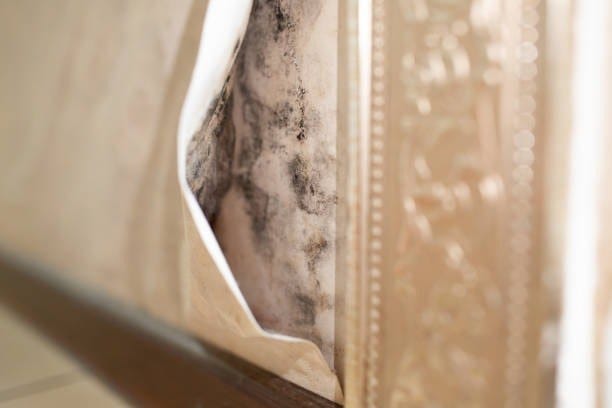
If you recognize two or more of the signs described above, take the following steps in sequence rather than immediately opening walls or beginning surface treatment.
Step 1: Do Not Open the Wall Without Professional Assessment First
The instinctive response when hidden mold is suspected is to open the wall and look. Without professional containment equipment in place before the wall is opened, cutting into drywall with an established mold colony behind it releases a concentrated burst of spores into the living space. Professional hidden mold detection and remediation always establishes containment before any wall opening occurs.
Step 2: Schedule a Professional Mold Inspection
A professional inspection using moisture meters, thermal imaging, and air sampling locates the mold source and maps its extent before any walls are opened. This step provides the information needed to open the right wall section in the right place with the right containment in place, rather than opening speculatively in multiple locations.
Step 3: Identify and Resolve the Moisture Source
Before remediation of the mold itself, the moisture source driving the growth must be identified and resolved. A plumbing leak must be repaired. An exterior wall penetration must be sealed. A condensation problem must be addressed through pipe insulation or improved ventilation. Remediating hidden mold without eliminating its moisture source produces a temporary result because mold will recolonize the same location once new material is installed.
Step 4: Professional Remediation of Affected Materials
Mold in walls that has penetrated drywall, insulation, or wood framing cannot be cleaned in place. Affected drywall sections must be removed and the cavity inspected. Wood framing showing active mold may be treatable with commercial antimicrobial products if structural integrity is maintained, or may require replacement if penetration is deep. All contaminated insulation must be removed and replaced.
Professional remediation of hidden wall mold uses negative air pressure containment, HEPA vacuuming of all exposed surfaces, commercial antimicrobial treatment, and post-remediation air sampling to confirm the work is complete before new drywall is installed. Our guide on the complete guide to mold remediation provides a thorough overview of this process.
For situations involving mold basement drywall or below-grade wall mold, our guide on basement mold removal services covers the specific challenges and solutions for below-grade mold remediation.
Preventing Hidden Wall Mold From Developing
The most effective prevention targets the moisture sources that create hidden wall mold before they have time to produce growth.
Inspect plumbing regularly. Check under sinks, in utility rooms, and around water heaters seasonally for any signs of moisture, mineral staining, or soft cabinet floor material that indicates a slow drip. Have an old or deteriorating supply line replaced before it fails rather than after.
Maintain exterior seals. Inspect window caulking, door frame sealant, and any wall penetrations for utility lines or hose bibs annually. Reapply exterior caulk wherever cracking or separation is visible before the next rain season.
Monitor humidity in problem rooms. Use a digital hygrometer in rooms that have shown any signs of moisture issues. Consistent readings above 55 to 60 percent in a room with no obvious humidity source may indicate moisture transmission from inside a wall cavity.
Address any exterior stucco or siding damage promptly. Cracked stucco or damaged siding is a direct pathway for rain water into the wall cavity behind it. Repairs made within days of damage being noticed cost a fraction of the remediation required after hidden mold has established from months of water entry.
Act on any water stain or discoloration immediately. A new stain on a wall is a symptom of moisture that found a pathway in. It rarely resolves on its own and almost always continues unless the entry point is sealed and the trapped moisture in the cavity is addressed. Painting over a water stain without investigating its source is one of the most reliable ways to develop hidden wall mold.
Final Thoughts
The signs of hidden mold behind walls are consistent and recognizable to anyone who knows what to look for. A musty odor with no visible source, paint changes at the wall surface, soft or discolored drywall, health symptoms with an indoor pattern, and physical changes in baseboards and trim all point toward the same thing: a moisture event inside the wall cavity that has been producing mold growth for long enough to affect the surrounding materials and air quality.
Acting on these signs early means addressing a contained problem that can be remediated at reasonable cost. Ignoring them allows mold in walls to spread through wall cavities, affect adjacent rooms, compromise structural framing, and produce escalating indoor air quality problems and health effects that are far more expensive to resolve.
The team at The Mold Guys provides professional hidden mold detection, mold removal, and structural drying services across Southwest and Central Florida. With over 25 years of experience identifying and eliminating hidden mold in Florida homes, they have the tools and expertise to locate the problem precisely and resolve it completely. Contact The Mold Guys today for a professional assessment whenever wall mold is suspected.
FAQs
Q: How can I tell if there is mold inside my walls without opening them?
A: Look for a persistent musty odor strongest near electrical outlets on exterior walls, paint bubbling or peeling, wall surface discoloration, soft or spongy drywall when pressed firmly, and baseboard lifting or warping. Professional tools including moisture meters and thermal imaging cameras provide objective confirmation without opening walls.
A: Yes. Active mold growing inside a wall cavity releases spores that migrate through electrical outlets, gaps around trim, and duct penetrations into living spaces. Persistent respiratory symptoms, allergy reactions, and fatigue that are consistently worse at home than elsewhere are often the first signs of hidden mold exposure.
A: Cost depends on the extent of growth, the materials affected, and how many wall sections require removal and replacement. Minor contained mold in a single wall section costs significantly less than widespread contamination involving multiple rooms or structural framing. A professional mold inspection scopes the work accurately before any cost estimate can be meaningful.
Q: Will painting over a wall stain prevent mold from spreading?
A: No. Painting over a water stain or visible mold covers the surface symptom while leaving the moisture source and active colony untouched. The mold continues growing beneath the paint layer and eventually pushes through. This approach delays visible evidence while allowing the hidden colony to grow larger and penetrate deeper into materials.
Q: How long can mold grow inside a wall before it becomes serious?
A: Mold can establish in a saturated wall cavity within 24 to 48 hours of water intrusion. Without intervention it grows continuously and can spread through adjacent wall sections and affect structural framing within weeks. Discovery after several months typically means the affected area is significantly larger than it would have been had early signs been acted upon promptly.